Chemical changes occur around us, and inside us, all the time. When chemical reactions happen, one or more new substances are formed and energy is either given off or absorbed in the process. Spontaneous chemical reactions, those that occur naturally under favorable conditions release free energy, meaning they are exergonic. Endergonic reactions, by contrast, require net energy input to make the reaction happen. This excellent learning resource explores energy associated with chemical reactions, and cover areas such as activation energy and product formation, standard heats of reaction, thermochemical equations and Hess’ Law, and specific heat capacity and calorimetry. It is essential viewing for any Chemistry student, providing clear explanations and easily understood visuals, including comprehensive chemical equations, about concepts that many students find challenging.
Subjects: Chemistry
-

Forms of Energy
Energy is never created nor destroyed – just transferred from one form to another. It’s one of the most fundamental concepts in physics, but can be one that students find challenging when first introduced to it. This video production uses an engaging presenter and familiar objects and scenarios – including skateboarding, tennis, vehicles and plant growth to explore different forms of energy, their effects on objects and processes and conversion from one form to another. Sections include what is energy, kinetic energy (including electrical, radiant and sound), potential energy and energy transformations. Students of Science at lower to middle levels will find this resource ideal for consolidating their understanding of these important fundamental areas.
-

Push and Pull Forces
Any type of motion means a force is at work, it is one of the most fundamental concepts in physics, and has formed the basis of the work of many pioneering scientists, including Isaac Newton. This program introduces forces and some important basic laws and principles of physics. Content covered includes defining and identifying forces, balanced forces, unbalanced forces and inertia. Led by a presenter, a range of familiar objects is used to demonstrate and simplify a number of concepts, including a car, a canoe, a bicycle and even a milkshake. It is an engaging resource, aimed at lower to middle level secondary students of Science, which uses every day situations to explain these important fundamental areas.
-

Module 3: States of Matter
Follow the matter road and you’ll find solids, liquids and gases, oh MY! The structure and phase changes will be presented using cheesy examples, (yes cheese) and we’ll find out why unruly gases have their own laws. Topics include: What Is Matter?, Solids and Liquids, Phase Changes and Diagrams, Intro to Gases, and Gas Laws.
-

Module 4: Solutions
This program stirs things up by showing how combining chemical substances turns substances into mixtures! You’ll have all the answers, or solutions, on how combinations can be dry, wet, chunky, hearty, smooth, creamy, strong and even invisible. So don’t lose your concentrations when these solutions are being presented. Topics include: Solutions and Solubility, Expressing Concentration, Raoult’s Law and Colligative, Properties, and Non-Ideal Behavior.
-
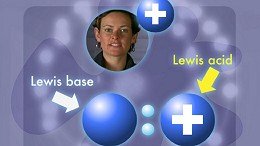
Module 5: Acids and Bases
You don’t have to go far to find acids and base; they can be found in your kitchen, your garden and even in your lunch. This program goes a bit deeper to define what makes acids and bases do their thing, and what happens when they combine and react to each other. Topics include: Chemical Reaction Basics, Definitions of Acids and Bases, Properties of Acids and Bases, Acid-Base Reactions, and Other Mixtures.
-
Module 6: Chemical Reactions & Equilibrium
Chemical Reactions happen all over, from the far away sun to the cup of water sitting next to you. These reactions are a rearrangement of same old atoms we know and love with some chemical magic. This program reveals the magic and terms involved in writing and understanding chemical equations. Topics include: Chemical Reactions, Precipitation Reactions, Oxidation-Reduction Reactions, Kinetics, Equilibrium, and Nuclear Reactions.
-
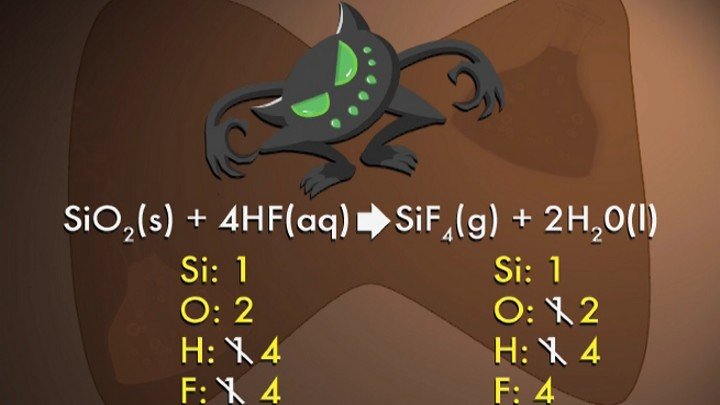
Module 7: Stoichiometry
The Standard Deviants are so stoked to present this branch of chemistry, it has a leading role. Stoichiometry will awe you with mathematical performances and move you with a balancing act of equations. You will be applauding Stoichiometry’s overwhelming performance. Topics include: What is Stoichiometry?, the Metric System, Balancing Equations, Molar Conversions, Mass Percent and Empirical Formulas, and Limiting Reactants
-
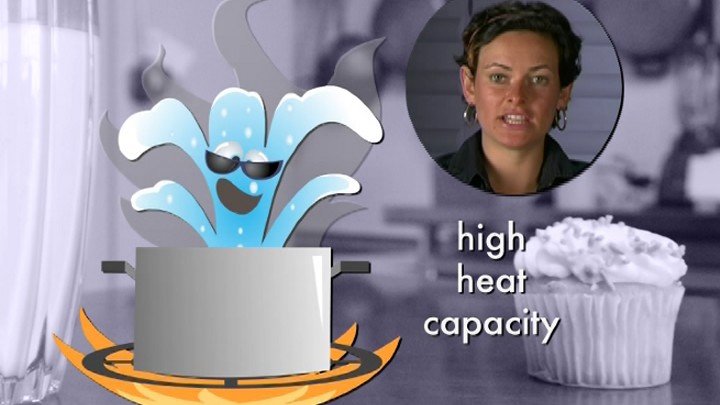
Module 8: Thermodynamics
It’s time to get energized and make things light up, heat up, power up and break-up. This program will melt away the complexity of thermodynamics and the functions and laws behind it. Heat up your class and make things happen, just like the energy found in this video. Topics include: Energy Basics, State Functions and Hess’s Law, The First Law of Thermodynamics, The Second Law of Thermodynamics, and Gibbs Free Energy.
-
Chemistry Super 8 Pack
The award-winning Standard Deviants tackle the massive world of Chemistry. The positively charged cast of young actors will explain a massive amount about the materials that make up our universe and what happens when they react. No matter is left untouched as animated characters and on-screen graphics help visualize the bonding at an atomic and massive level.