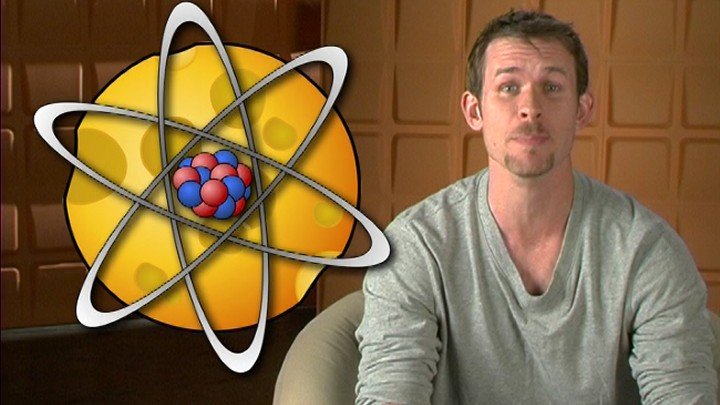
It’s not just for fashion; models are used to show even how the tiniest pieces of matters are outfitted! This program will outfit you with all you need to know about atomic mass, and will introduce the road map of elements known as the Periodic Table. Topics include: Intro to the Atom, Atomic Mass, Atomic Number, Isotopes, The Periodic Table of the Elements, and Electron Energy Levels.
Subjects: Chemistry
-
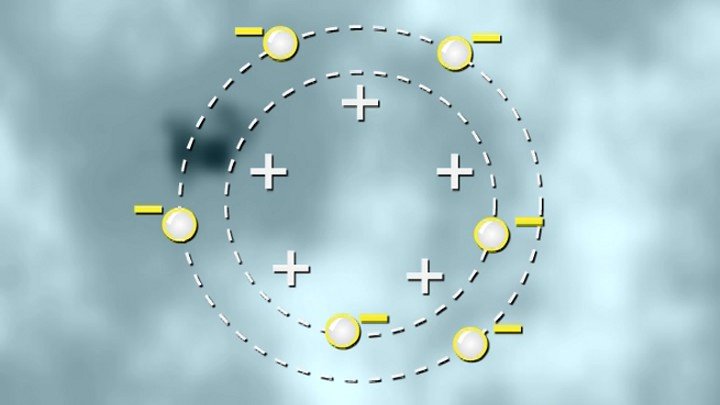
Module 2: Bonds & Molecular Structure
Bonding happens more than just amongst your friends; it is an essential part of keeping matter together. Learn how the idea of sharing charges and building strength in numbers are an essential parts of chemistry. The VSEPR theory will describe the shapes and geometric make-up of the friendly molecule. Topics include: Sharing Electrons, Bonding and Molecules, Bonding Tendencies, Isomers, VSEPR Theory, and Molecular Geometry.
-
Chemical Equations in the Real World
The word ‘chemicals’ might bring to mind pools of swirling, poisonous mixtures, dangerous acids or secret formulas… but they are far more prominent in everyday life than we might first think. Very little in the physical world around us occurs without chemical reactions being involved. In this way, many of the important processes in modern manufacturing and product use can be summarised with chemical equations. This program takes an in-depth look at five common products that are in use all around us and explores the chemistry behind their manufacture and/or use, including chemical equations. Using graphics and footage from inside manufacturing plants, we see examples of how chemistry is so prevalent in the real world – and examine various reactions taking place. The products are soap, polystyrene, aluminium, paint and car batteries.
-
What Are Atoms Made of?
It’s called a theory but if we have never seen an atom how did any one ever come up with an idea that is so central to Science. This program shows how all the pieces of the puzzle have come together at the same time as explaining the structure of the atom and the Periodic Table.
-
Science in the Garage
From the moment we open the door and enter a familiar, everyday family garage, we begin a journey of discovery about forces and their effects. From the family car to the kid’s bikes and skateboards, we explore a range of forces at work. In this fun and accessible Australian-made, primary curriculum fit program, we learn that energy is transferred through pushes, pulls and collisions and that when forces act on objects energy transfers are occurring even if we can’t see them. We find examples of gravity, friction, propulsion, air resistance, attraction and repulsion all lurking around the garage.
-
Science in the Kitchen
This program will completely change the way you view the average family kitchen! Where you would have once just seen food in the fridge, you will now find solutions, suspensions, chemical reactions, melting, mixing and dissolving! ‘Science in the Kitchen’ transforms an average family kitchen into a chemistry laboratory, where our student ‘scientist’ conducts simple experiments using common ingredients. By linking to students’ prior knowledge and life experience, this Australian-made, primary curriculum fit program demonstrates, in a clear, practical and entertaining way, key scientific concepts that students often find confusing, including: states of matter, chemical and physical reactions, and scientific methods and procedures.
-
Chemistry Concepts 1: Atomic Structure; the Periodic Table; Limitations of Bondi
This comprehensive learning resource consists of four video segments on key chemistry concepts with short answer and multiple choice questions related to each video, an interactive periodic table, and a PowerPoint demonstration. We explore atomic modeling through history, from the ancient Greeks and Chinese through to 19th and 20th century models. We examine the development of the periodic table, from the discovery and classification of different elements and their properties to Mendeleyev’s system of classifying chemical elements. We also discuss various bonding models and the limitations they pose in accurately explaining and accounting for bonding phenomena.
-
Nuclear Chemistry: Nature’s Power Pack
Nuclear energy has been a controversial topic for decades, and this lesson will equip you with the necessary knowledge to join any conversation about the topic. You will begin by analyzing nuclear reactions so you can identify what is occurring at the atomic level. You then will use this information to explore why nuclear reactions are so energetic as well as build awareness around the differences between the three types of nuclear reactions. Finally, you will dive into the benefits and risks of nuclear energy to help you solidify your own position on its use or misuse. As energy needs continue to increase, nuclear energy will continue to be at the center of the discussion in the United States as well as around the world.
-
Biochemistry: The Chemistry of Life
In this lesson, you learn a great deal about the depth to which chemistry explains every part and process related to the human body. As you know, chemistry often deals with small, almost invisible substances, and in this lesson you will focus on the cell. You will also explore in detail how much our body is affected by the various sources of energy you eat, such as carbohydrates, fats, and proteins. As you will discover, your body and your health are not solely determined by how much you exercise and what you eat. Genetics, in the form of DNA, helps explain who you are and even who you may become, including the types of diseases you may inherit that have afflicted the people you are related to. Why are fats not all bad? Why should you not cut out carbohydrates completely, even when on a diet? How can a disease from your grandfather pass on to you? You will find answers to all these questions and more in the final lesson of this chemistry course.
-
Acid/Base Chemistry: Proton Power
This lesson continues the discussion of acids and bases started in Lesson 6. You will learn how to identify the difference between acids, bases, and salts, including their structure, formula, physical properties, and the substances they interact with. You will also learn about integral role of neutralization reactions as well as hydrogen and water. You will then learn the importance of knowing the difference between dangerous and safe acids and bases. Your perception of weak and strong will be altered along the way, and you will finish this lesson with a better awareness of how to safely handle these substances that are everywhere around you.