Networking – It’s making connections, forming relationships, acquiring knowledge and showing your skills. But what is the best way to do this in the age of online networking? These days it is rare for people to solely rely on face to face contact, typed letters or telephone calls. E-networking is the way of the future but with it comes new dangers that we all must be aware of and considerations that must be taken into account. In this program we explore what e-networking is and the precautions we all should take to ensure our online identity accurately reflects who we are, assisting us in the job seeking process. One thing is certain – e-networking is here to stay.
Producers: VEA Group Pty Ltd
-
Answering Interview Questions
Answering interview questions well goes a long way to winning any job. But interviews are by their very nature challenging, and for many people confronting. However there are a number of ways you can effectively prepare for the interview and decrease your anxiety. In this encouraging program, we look at a number of ways you can improve your performance when answering interview questions. We explain how to prepare yourself before the interview, how to anticipate common questions, and how to deal with the more difficult and challenging ones. Speaking with a recruitment specialist, we also investigate the difference between one-on-one and the group interview processes.
-
Fitness, Skill and Training
When beginning any health and fitness program we need to test our health-related and skill-related components of fitness in order to expose our strengths and weakness and to determine what components we need to work on. This doesn’t just apply to a trained athlete, but is just as relevant to the untrained person of any age. In this program we learn practical tests that measure the health-related and skill-related components of fitness, how to apply the FITT principle to a training program, and what happens to the cardio-respiratory system when we exercise.
-
Conductor and Strings
Bobby is a zany and enthusiastic young musician who wants to join the orchestra. But Strauss the Conductor must teach him a thing or two about the orchestra first… Through the antics of these two engaging puppet characters we gain an insight into the conductor and string section of the orchestra. We explore the history and development of ancient chordophones to the modern day violin, viola, cello, double bass and harp. We see these instruments in action and hear their sound qualities, exploring a range of playing techniques and varying timbres. This Australian-made, curriculum fit program also highlights the important role that the conductor plays within the orchestra.
-

Woodwind and Brass
Young Bobby, an enthusiastic and zany musician, has no idea about the orchestra, but luckily Strauss the Conductor is here to teach him before he joins up. Through the antics of these two engaging puppet characters we learn all about the woodwind and brass sections of the orchestra. We explore the history and development of ancient aerophones to the modern day flute, clarinet, oboe, bassoon, trumpet, French horn, trombone and tuba. We see and hear these instruments in action and explore a range of playing techniques and varying timbres. This Australian-made, curriculum fit program also shows woodwind and brass instruments being used in contemporary music.
-
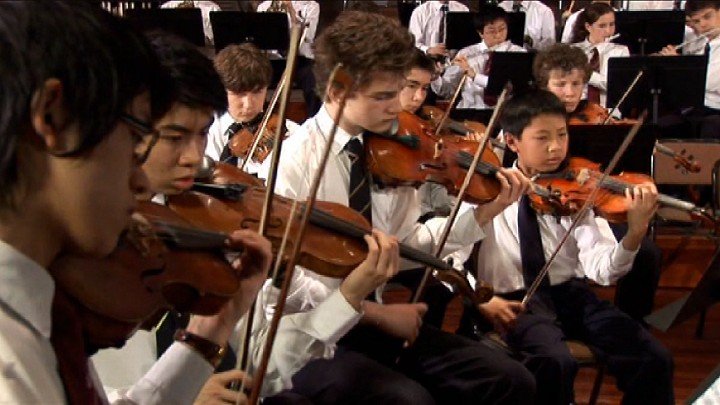
Percussion and Orchestral Diversity
Young Bobby is learning a lot about the orchestra from his new mentor, Strauss the conductor. But he still has more to learn before he can become a member of the orchestra. Through the antics of these two engaging puppet characters we are introduced to the percussion section of the orchestra, exploring the history and development of ancient membranophones and idiophones to modern day orchestral percussion instruments. We see and hear these instruments in action, exploring a range of playing techniques and varying timbres. This Australian-made, curriculum fit program also highlights important performers and outlines the typical orchestral idioms of today, various educational programs, and emphasises contemporary concepts.
-
STIs: Facts and Fiction
Becoming sexually active is a choice many teenagers make – one that should be made with solid understanding of the threats to their health and that of their partners. In this program we take a detailed look at sexually transmitted infections, commonly known as STIs. We specifically focus on the facts and myths, decisions and getting help, symptoms and consequences, and treatment and protection. Also discussed are the differences between STDs and STIs, and how you should deal with a STI should you contract one. Being aware and remaining vigilant to the threat of STIs can reduce the likelihood of suffering long term damage or passing the infection onto someone else.
-
Influences on Movement
How can we use biomechanical principles to enhance performance? Trained athletes, fitness fanatics, and casual exercisers alike can all benefit from an understanding of biomechanics. In this program we see the main types of motion in action and learn how to calculate velocity, acceleration and momentum. We examine the two types of balance, discover the importance of knowing your centre of gravity and learn how to calculate force. We also explore the principles of fluid mechanics, including buoyancy, displacement and resistance. This is an action-packed, insightful examination of the mechanics of our bodies in motion.
-
Colons, Semicolons, Brackets, Dots and Dashes
Punctuation is something many people have trouble getting their heads around. This program provides a comprehensive guide to proper punctuation. We examine some common punctuation errors and pitfalls, and explain how to improve our written expression. We’ll look in detail at the functions of colons, semicolons, dashes, parentheses and ellipses. These punctuation marks are often avoided in everyday writing, due to confusion about their features and functions. In this program we offer some simple rules to optimize the use of these punctuation marks, and demonstrate that effective punctuation needn’t be complicated.
-
Apostrophes and Quotation Marks
Some of the most misused and misunderstood pieces of punctuation are also the smallest. This program provides a practical review of two important punctuation marks – apostrophes and speech marks. We begin with the troublesome apostrophe, its origins, functions and the reasons why it remains a necessary part of the English language. The program provides a detailed look at how to use apostrophes to indicate possession and to spell contractions. We also revise the proper use of quotation (or speech) marks, and examine some common errors in using these tricky punctuation marks in written expression.