Every business needs customers. And to get customers to buy your product or service, you have to know what they want. That is where market research comes in. Market researchers try to gather information about consumers’ perceptions and attitudes on a whole variety of subjects, from particular products and brands, to government policy and even their hopes for the future. This information can then be used to design products and services that meet customers’ needs, or to design marketing campaigns that communicate effectively with a products’ target market. We look at qualitative and quantitative research, as well as the different techniques that are used to obtain information, from surveys and interviews to customer loyalty schemes and the internet.
Producers: Classroom Video
-
Medical Scientists at Work
3 videos of Scientists at work. Topics include BUG MEDCINE – Scientists are collecting insects and other bugs to see if they contain chemicals that will be useful for medicines; DATING WITH DNA – Scientists look at how some diseases can be carried on DNA and how this can be inherited; OLYMPIC FLU – How Scientists developed a vaccine that can work with any variety of flu.
-
Multicultural Canada (Senior)
This popular and acclaimed video looks at multiculturalism by asking first what we mean by culture. Culture encompasses our beliefs, values and how we think and view the world around us. Topics covered in this video include the history of diversity, multicultural policy, integration, racism and discrimination, culture sharing and how to build on multiculturalism.
-
Multicultural Canada (Junior)
This popular and acclaimed video looks at multiculturalism by asking first what we mean by culture. Culture encompasses our beliefs, values and how we think and view the world around us. Topics covered in this video include the history of diversity, multicultural policy, integration, racism and discrimination, culture sharing and how to build on multiculturalism.
-
Murray-Darling Basin
The Murray Darling Basin is a vast fertile region in the south-east of New South Wales. One of the world’s longest river systems, it is host to a thriving agricultural region and a fascinating human history. Intensive farming ever since the 1800’s is now taking its toll on the environment. If the region is to continue as an agricultural bowl then the issue of sustainable development needs to be addressed.
-
Sons et Phenomenes Vibratratoires
La physique de la musique nous emmene dans un voyage derriere la beaute et l’inspiration de la musique afin d’explorer ses principles scientifiques. Nous examinons une large gamme d’instruments, allant du violon classique au ‘didjeridoo’ et au synthetiseur pur illustrer les concepts et les formules des ondes sonores. L’oscilloscope a rayons cathodiques est largement utilise pour demontrer comment les notes musicales complexes sont construites a partir de formes d’ondes plus simples.
-
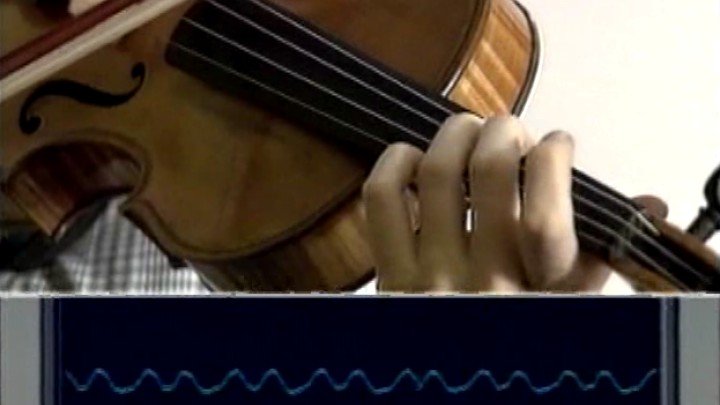
Physics of Music
Topics include wave nature of sound, sound on a CRO; music versus noise; pitch, frequency, amplitude, wavelength; musical scale, octaves; hearing and decibel scale; timbre of voice and other instruments explained by waveforms on CRO; interference & superposition producing beats; strings, wind, reed, and percussion.
-
Narrative Structures
Narrative Structures explores the necessary ingredients in writing better pieces of Narrative fiction. What are the better strategies for telling your story in a more interesting way? A must for students of Creative Writing. Topic Areas: what is a narrative, and how is it different to a story or a plot; setting. What do you need to set up a piece of narrative fiction; describing characters; thematic concern.; the three act structure explained, what is a three act structure, and how is it used?
-
Nature of Matter
Some of the key experiments performed between 1870 and 1940 which established the structure of the atom. Cathode ray tubes, canal rays, mass spectrometer, Thompson’s plum pudding model, Rutherford’s gold foil experiment, the Bohr model and the orbitals and quantumz mechanical model.
-
Non-Ferrous Metals
A comprehensive introduction to non-ferrous metals and their uses: what are non ferrous metal; raw materials: main sources world-wide; primary production: converting raw materials into useful materials; physical and chemical properties, methods of testing; secondary processing: methods of turning metals into products; properties & uses of : gold, silver, copper, brass, aluminum, magnesium, tin, titanium, zinc; properties and uses of major alloying metals: chromium, nickel, tungsten, vanadium; selecting of materials: importance of matching end-use requirements with material properties; recycling: importance and methods.