This best-selling video looks at Canada’s involvement in the Second World War. Topics include declaration of war; Canadians at war on land, sea and air; the fall of Hong Kong, Dieppe, campaigns in Italy and France, the battle for the Atlantic; the home front – war economy, women’s role, domestic politics, conscription issues, and internment of Japanese-Canadians.
Subjects: History
-
La Deuxieme Guerre Mondiale
Cette vidéo três réussie fait un survol du rôle du Canada dans la Deuxiême Guerre Mondiale. Les matiêres incluent la déclaration de guerre; les Canadiens en guerre sur la terre, en mer et dans les airs; la défaite de Hong-Kong, de Dieppe, les camapagnes d’Italie, de France et la bataille de l’Atlantique; Au pays – l’économie de guerre, le rôle des femmes, la politique intérieure, la conscription et l’internement des Japonais-Canadiens.
-
Life at the Beginning of the Twentieth Century
Using interviews, archival film and photographs this program focuses on living conditions and everyday life in Western nations at the beginning of the twentieth century. Subjects explored – housing, cooking, clothes, domestic service, education, transport and leisure.
Themes include: * changing role of women * urbanization * class division and unequal distribution of wealth * technological change and its impact. -
The Weimar Republic
Topics include emergence of democracy, the ‘November Criminals’, civil unrest, the Treaty of Versailles, the Treaty of Rapallo, French invasion of the Ruhr, hyper-inflation, Gustav Stresemann and the ‘golden years of the Weimar Republic’, outpouring of cultural and intellectual ideas, the Depression, the rise of the Nazi party, and the failure of democracy.
-
Sto:lo – People of the River
THE STONE PEOPLE. In the Frazer valley many ancient peole were turned to stone in order to encourage people to live well. LEGENDS AND ARCHAEOLOGY. Many of the ancient stories correlate with historic events such as sea level changes. Gordon Mohs explains the legends and show his archaelogical dig near to one of these stone people. NATIVE SPRITUALITY The people still have their traditional beliefs handed down from generation to generation.
-
The Russian Revolution
From the reign of the last Tsar to the death of Lenin, this video covers the major events leading up to, and immediately following, the 1917 Russian Revolution. Topics discussed include the influential personalities (Nicholas II, Alexandra, Rasputin, Kerensky, Lenin); the lifestyles of Russian people (rich and poor); the impacts of industrialization; the Russo-Japan War; Bloody Sunday; World War I; the March and October Revolutions.
-
Knights and Castles
For five hundred years, castles held the key to power and dominated the landscape. This video looks at why they were built, life inside them and the reasons behind their demise. It covers: castles – their defense, layout, great hall, the keep, the moat; castle life – food, cooking, medicine; knights – jousting, knighting ceremony, feasting; combat and armor; war – battle of Tewkesbury( re-enactment); the end of castles – attack strategies, the advent of gunpowder.
-
Conflict in Indochina
Why was the US in Vietnam, and why did they lose the war? This video deals with outcomes of the 1956 Geneva conference,”Americanisation”, strategies and objectives of both sides, the assassination of Diem, the Gulf of Tonkin resolution, the Tet Offensive and the “Television War”, “Vietnamisation”, the peace movement, the peace agreement, the withdrawal of US troops, and the collapse of the South.
-
The Industrial Revolution
In the first 40 years of the Industrial Revolution, human society and daily life changed more than it had in the previous 7000 years. With the development of steam power, factories and mass production, the world entered the machine age. This video investigates the origins of the Industrial Revolution, and the changes it brought to the lives of millions of people all over the world.
-
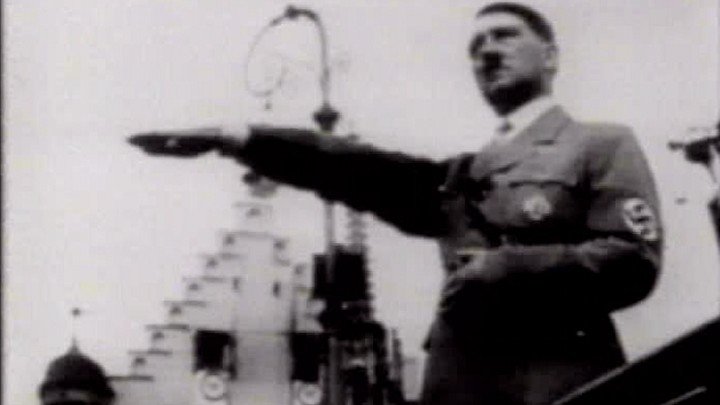
Life under Adolf Hitler
In Germany between 1933 and 1945, every aspect of life was influenced or affected in some way by Adolf Hitler and his Nazi Party. In some cases, this worked for the betterment of the average German – ordering economic effort, stimulating industry, creating employment, improving standards of living, and re-igniting a sense of pride in the nation. In other cases totalitarian control directed the nation down paths which had an opposite effect. Through the use of rare historical footage from archives around the world, this video succinctly portrays the essential nature of life under Adolf Hitler, in all its major guises.