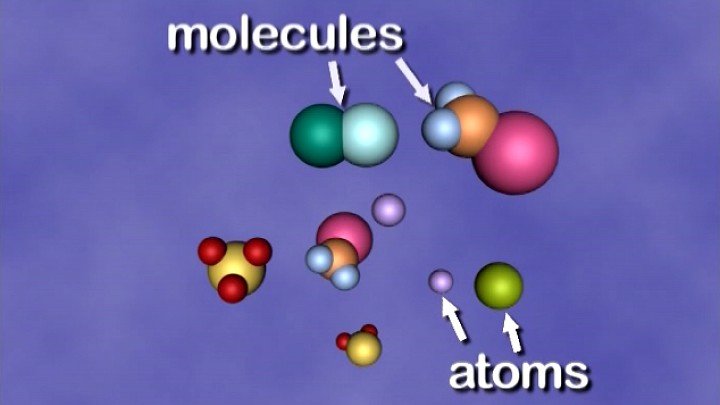
Learning about Solids, Liquids and Gases introduces students to the concept that all material is made of matter. Students examine a range of solids, liquids and gases and develop vocabulary and definitions to describe the three different states of matter. Differences are then identified, and this information is used to group materials into categories. The program also examines the difficulties in classifying materials, and how heat can effect matter and change it from one form to another.
Subjects: Earth Science
-

Learning about Air
Learning about Air introduces students to the concept of ?Air? and its various uses and properties. The program examines: the essentials of oxygen for living and growing; the variety of properties air is made up of; the concept of air having weight and taking up space; different situations air pressure is used in; and how air can form resistance and also be used as an energy source.
-
Learning about Water
Examines water and its various attributes and properties. Students will gain an insight into how 3/4 of the earth’s surface is covered by water but only 1% is drinkable. Also investigated is the concept that water can be found in the form of a solid, liquid and gas. The program examines the water cycle, from how water is a valuable energy source to causing great destruction in the world.
-
Biofuels – Alternative Energy Supply
This program investigates the mode of production of a range of biofuels, from biogas, ethanol and butanol to vegetable oils and biodiesel. Students will gain a thorough understanding of the topic as we look at their uses as well as the advantages and disadvantages of the various fuels.
-
Petroleum and Oil Refining
The program deals with how petroleum is formed, its properties and uses. Structures and formulae of hydrocarbons are examined and 3-D animation is used to clearly show the composition of various linear, cyclic, saturated and unsaturated compounds in an engaging and easy to understand format. The program takes an in-depth look at how petroleum (a mixture) is refined into fractions and how these fractions can be changed to have more useful properties. Various cracking and reforming processes are investigated, showing raw materials, processes and products.
-
The Sustainable Forest and the New Forest Economy
The Sustainable Forest and the New Forest Economy is three, 20 minute programs written by Ray Travers, professional forester and Chair of the Eco-forestry Institute Society, and award-winning filmmaker, Edward Homer. The three part series is a practical guide for anyone interested in sustainable forestry, eco-certification and marketing of eco-certified wood products: from the forest to the finished product.
Part One: “The Sustainable Forest”– looks at how all of the systems in the forest interact; soil, wildlife, and different types of trees. This first segment features Merve Wilkinson and his Wildwood Forest in BC, which is a fantastic example of the potential for selective logging. Also covered in this first segment: planning the road system, promoting, and using woodpeckers and birds for insect control and natural regeneration.
Part Two: “Harvesting the Timber” — looks at calculating the volume to be harvested in a selective forest as well as a second growth forest. This segment covers; criteria for selection, falling trees in a sustainable forest, skidding the trees with small skidders and horses with ecoforester, Bob Woods.
Part Three: “Eco-Certification and the New Forest Economy”– looks at Al Hopwood’s woodlot, one of the first woodlots in Canada to be certified by the Forest Stewardship Council (FSC). We tour Al’s operation and he explains the FSC certification process and benefits. We follow the first shipment of eco-certified logs to Sarita Furniture in Port Alberni, BC, a value-added mill that is also certified by FSC. -
Timber for Tomorrow
The Sustainable Forest and the New Forest Economy is three, 20 minute programs written by Ray Travers, professional forester and Chair of the Eco-forestry Institute Society, and award-winning filmmaker, Edward Homer. The three part series is a practical guide for anyone interested in sustainable forestry, eco-certification and marketing of eco-certified wood products: from the forest to the finished product.
Part One: “The Sustainable Forest”– looks at how all of the systems in the forest interact; soil, wildlife, and different types of trees. This first segment features Merve Wilkinson and his Wildwood Forest in BC, which is a fantastic example of the potential for selective logging. Also covered in this first segment: planning the road system, promoting, and using woodpeckers and birds for insect control and natural regeneration.
Part Two: “Harvesting the Timber” — looks at calculating the volume to be harvested in a selective forest as well as a second growth forest. This segment covers; criteria for selection, falling trees in a sustainable forest, skidding the trees with small skidders and horses with ecoforester, Bob Woods.
Part Three: “Eco-Certification and the New Forest Economy”– looks at Al Hopwood’s woodlot, one of the first woodlots in Canada to be certified by the Forest Stewardship Council (FSC). We tour Al’s operation and he explains the FSC certification process and benefits. We follow the first shipment of eco-certified logs to Sarita Furniture in Port Alberni, BC, a value-added mill that is also certified by FSC. -
Wildwood: One Tree at a Time
When Merve Wilkinson decided to “selectively” log his 136 acre Wildwood forest (on Vancouver Island, BC) back in 1939, his neighbours thought he was a fool. More than 60 years later, Merve is still logging the same forest and still making part of his living from it every year. His secret? Selective logging. Today, thousands of people come from all over the world to see the trees and talk with the man who has become legendary for creating a truly sustainable forest. The program follows Merve as he selects and harvests trees, instructs a group of eco-forestry students, and explains his methods and philosophy from a lifetime of experiences. The documentary also chronicles the history, and some of the challenges and controversy in the logging industry – from the Clayoquot road blockade to displaced loggers. Both sides are presented illustrating there are no quick and easy solutions.
-
Conditions for Life
Investigates the possibility of life on other worlds, and the effects living things have on their environment. The underlying theme is the universality of scientific knowledge and its ability to lead us to reasonable hypotheses.
-
Water Through the Ecosystem
Examines how transpiration affects climate. Explores the properties of semi-permeable membranes, and relates these to living cells. Discusses how plants adapt to climate and the effect of large bodies of water on climate patterns.