The work of front line renewable energy research scientists and the commercial applications. Topics include the future of fossil fuels; solar – photovoltaic, thermal and wind; critical new energy storage technologies; the concept of energy pay back; social issues.
Producers: Classroom Video
-
Genetics and Reproduction
This video explores the revolution in genetic medicine and highlights the social and ethical implications of the emerging reproductive technologies. Will it lead to designer babies? Through personal stories, students will realize the difficult decisions that parents confront when there is a family history of genetic disease.
-
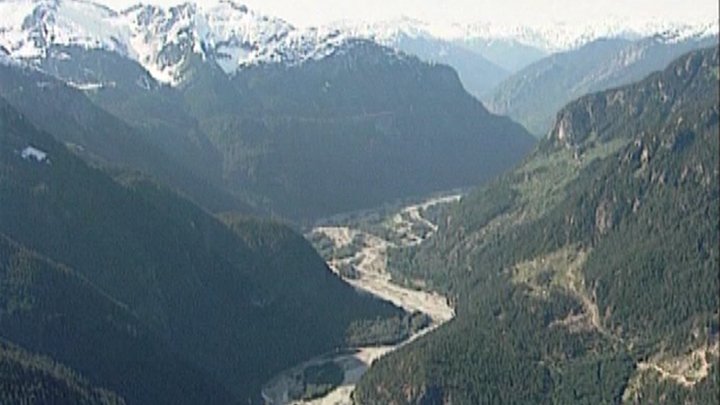
River Landforms
Using examples from around the world, this video looks in detail at the landscapes and features along the courses of rivers, examining the processes that have shaped them over thousands of years. Topics include : sources of rivers, erosion, transportation, deposition, drainage basins and patterns, flood plains, levees, terraces, meanders, sandstone, granite and limestone landforms.
-
Properties of Waves
IIf the movement of a particle causes delayed movement in its neighbor we have a wave. Incorporating new graphics this updated video shows: transverse waves, tension waves such as ripples, gravity waves, longitudinal or push waves, shear and torsional waves; characteristics, amplitude, freq. vel. Period; V = nL is demystified with a passing train; velocity, refraction, reflection, superposition, diffraction interference and standing waves.
-
People of Porgera – 1984
This is the original film we made of the Porgera people in PNG before mineable gold was discovered. They show us their courting ceremony, a sing sing, marriage and bride price, wealth, debt and payback, salt, stone axes, trade, village court and prison system, what happens to wages from jobs with the mining exploration team, and talk about their hopes of wealth in the future.
-
Preparing Wood – FEWTEL
This program illustrates the six steps of preparing a piece of lumber for use in a woodwork project. It employs the acronym, FEWTEL, as a way of remembering the sequence of these steps: F: Face side; E: Face Edge; W: Width; T: Thickness; E: End; L: Length. A student using hand tools demonstrates each stage in the process, but mention is also made of the use of machine tools. In addition to the FEWTEL process, the video deals with how to minimize waste in the workshop and choosing the type and size of stock. Hand tools employed include the plane, the try-square, and the marking gauge. Care is taken to maintain proper safety procedure throughout the video.
-
Food Preservation
This video looks at food preservation methods and the factors that cause food to spoil. Factors affecting food preservation are examined: reasons for preserving food; enzyme activity in food; methods for controlling growth and killing micro-organisms; environmental factors: hygiene and packaging.
-
Propaganda
This is a collection of archival footage from the propaganda films produced between 1916 and 1943, presented without additional commentary. Part 1 : World War One Propaganda films: Excerpts from Australian and German silent black and white films. Part 2 : World War Two Propaganda : British, German and Australian films.
-
Powered Saws
With the table saw having its own video in this series, this program looks at three other machine saws in a typical school woodwork shop:
the band saw – changing and selecting of the blade, a demonstration of freehand sawing, the use of relief cuts and jigs, ripping, cross cutting, and angled cuts; the radial arm saw – demonstrations include the changing of the blade, proper stance by the operator, cross cutting and special cuts, such as the dado; the compound miter saw – how it is used to make square cuts, how stops can be clamped to the fence to make multiple cuts, and how to make mitered and oblique angled cuts. Safety issues and proper operating procedures are addressed.