Is the world ready for this upgrade? The very foundation of computer science is changing. As Moore’s Law draws to a close, rules of quantum physics are taking over. Learn how leading researchers are using counterintuitive effects, such as superposition, in their quest to build ultra-powerful quantum computers. Prof. Laflamme explains how quantum particles behave, are controlled and, ultimately, can be used to calculate.
Languages: English
-
Gerard ‘t Hooft: Science Fiction and Reality
In the recent past, rapid scientific and technological developments have had tremendous impact on human society. The personal computer, internet and mobile telephones changed the world and shrank our planet. These developments are vastly different from the forecasts by science fiction authors who promised us space travel and intelligent humanoid robots. Could scientists have done a better forecasting job? What can we say about the future now? Nature’s laws are very strict but also show gaps that might promise fantastic possibilities for a scientific future, even within our lifetime.
-
Anton Zeilinger: From Einstein to Quantum Information
In 1905, Albert Einstein published several ground-breaking papers, including one on quantum physics for which he was awarded the Nobel Prize. Despite this, Einstein remained a critic of quantum theory his entire life. He did not accept the role played by randomness, the phenomenon of entanglement or the notion of complementarity. Since then, a number of experiments have confirmed aspects of quantum theory and given rise to a new field – quantum information science – where randomness, entanglement and complementarity are applied to process information in novel ways.
-
The Physics of Information: Quirks & Quarks
Do ideas about information and reality inspire fruitful new approaches to the hardest problems of modern physics? What can we learn about the paradoxes of quantum mechanics, the beginning of the universe and our understanding of black holes by thinking about the very essence of information? The answers to these questions are surprising and enlightening, but also controversial. The topic of information within physics has involved some of the 20th century’s greatest scientists in long-running intellectual battles that continue to the present day. In this special debate, hosted by the CBC’s Bob McDonald of ‘Quirks and Quarks’, you will enjoy a lively discussion between four prominent physicists who have thought long and hard about these questions.
-
Jeffrey Rosenthal: The Curious World of Probabilities
Probabilities and randomness arise whenever we are not sure what will happen next. They apply to everything from lottery jackpots to airplane crashes, email spam to insurance policies, and medical studies to election polls. Prof. Rosenthal’s exploration of odds and oddities will explain how a “Probability Perspective” can shed new light on many familiar situations in our everyday lives, and how computer algorithms which use randomness can be used to address problems in many branches of science.
-
John Ellis/Robert Orr: The Large Hadron Collider
International researchers at the Large Hadron Collider have embarked on one of science’s greatest adventures. With its very high energy, the particle collider will explore the mysteries surrounding the smallest particles of matter. It may also pierce secrets that the universe has hidden since the early stages of the Big Bang, such as the nature of dark matter and the origin of matter itself. It is the largest scientific experiment ever attempted and the complex international efforts to bring it to life, including Canada’s involvement, are part of this presentation.
-
Building Resilience
This program discusses how a person can become resilient and talks about methods that we could use to withstand stress and trauma without permanent damage. If someone is resilient, they have the ability to “bounce back” after something negative happens to them. The program outlines the importance for young people to build resilience so that they can recover from a trauma without developing any psychological problems.
-
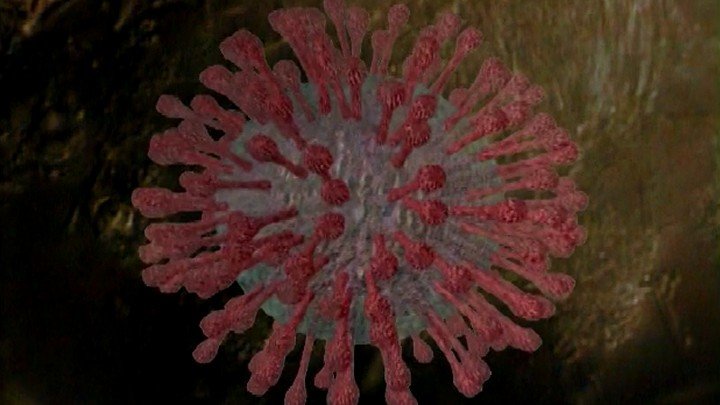
Emerging Diseases: Prions, Viruses
An emerging disease is one that has appeared in a population for the first time and a re-emerging disease is one that may have existed previously but is rapidly increasing in incidence or geographic range. The diseases discussed include SARS, Avian flu, Rift Valley Fever and Creutzfeldt-Jakob Disease. This program looks at the transmission, clinical features, diagnosis, treatment, vectors, prevention and control of these diseases.
-
Quality Control in Food Technology
TToday when we buy mass produced food products we expect consistent taste, texture, appearance and smell and a stringent standard of hygiene. Any divergence from this unspoken contract can result in disaster for the modern food producing company. Quality control is one of the most crucial factors of modern food technology the world over, yet it can be the hardest aspect to achieve. In this in-depth program we identify levels of control in different parts of the world, explore the many factors on how quality can be measured in food manufacturing and look at who is responsible for quality assurance within a large food manufacturer.
-
Safety in the Commercial Kitchen
Commercial kitchens must adhere to strict workplace health and safety procedures to prevent harm, illness and accidents occurring to both staff and clientele. This program outlines the basic workplace health and safety guidelines for the average commercial kitchen including, personal safety, working with heat, electricity, gas and dangerous equipment, and food hygiene.