Bullying is the most frequently occurring form of violence in schools. Bullying by, and against, girls is as commonplace as it is among boys, but often takes different forms. Girls are usually less physical than boys – their bullying is far more commonly psychological and emotional. However, the effects can be seriously damaging – in the worst case scenarios leading to long-lasting depression, self-harm and even suicide. This program examines the nature of bullying, bullying directed at girls, its impact, why bullies behave the way they do and protective strategies for girls and bullying. It features renowned adolescent psychologist, Dr Michael Carr-Gregg, as well as dramatized scenarios and vox pops. This program makes a valuable resource to deliver some important messages about this serious issue.
Grade levels: Senior High (10-12)
-
The Kendal Project: A Spiritual Revolution?
Between October 2000 and June 2002, a University of Lancaster study of the population of Kendal, a town near the Lakes District in the UK, revealed some fascinating trends in modern society’s approach to, and practice of, religion and spirituality. Known as the Kendal Project, the study looked at the prevalence of regular congregational church attendance compared with the popularity of spirituality in the holistic domain. This program explores the scope and methodology of the Kendal Project, its findings and conclusions about modern society, religion and spirituality, and examines implications and explanations of changing trends. We hear reflections from a range of people, including University of Lancaster academics involved in the Kendal project, a member of the clergy, and a modern day practicing witch.
-

Crimes Against the Environment
Can capitalism be a part of the solution? Could social pressure rather than laws be what compels us to become more ‘green’? Crimes against the environment take many forms, but it is a complex area of criminology. This excellent program, presented by Dr Steven Taylor, explores green crime and includes interviews with experts Dr Gary Potter and Dr Matt Follett. It introduces transgressive criminology and the wider concept of harm, which can be applied to problems like rainforest destruction and global warming. It looks at how Marxism and Beck’s late modern concept of risk can be applied to crimes against the environment, and investigates the paradox of economic growth and consumption versus the need to curb global warming and deforestation.
-
Principles of Physics 1: Mechanics and Light
The program presents key concepts of mechanics and light, employing high quality graphics and animations, live footage and worked examples of relevant formulas. Conveniently structured in short clip format, the mechanics section covers scalars and vectors, equations of motions, projectile and circular motions, Newton’s laws of motion including a dynamic illustration of the third law in action, kinetic and potential energies both gravitational and elastic, energy conservation, collisions, and conservation of momentum. The light section covers light as a wave, wave equation, combining light of different colours, reflection in plane and curved mirrors including ray diagrams, refraction, convex and concave lenses including ray diagrams, polarisation, diffraction, interference, photoelectric effect, wave-particle duality.
-
Credibility
What is credibility, and why is it so important? This program begins with an exploration of the concept of credibility and illustrates the key criteria of motive, bias, vested interest, neutrality, ability to perceive and expertise. A reconstruction of a famous murder case from the 1920s is then used to provide the material for viewers to evaluate the credibility of the evidence that was used. Finally, critical thinking author and former chief examiner Dr. Roy van den Brink Budgen provides his analysis of the case study and follow up support material. A very credible resource about credibility.
-

Nolinor 737
Nolinor Aviation’s 737-200 C is a combination cargo and passenger aircraft capable of flying to the most unforgiving place on Earth – the Arctic; it’s a lifeline for the Meadowbank gold mine in Nunavut.
-
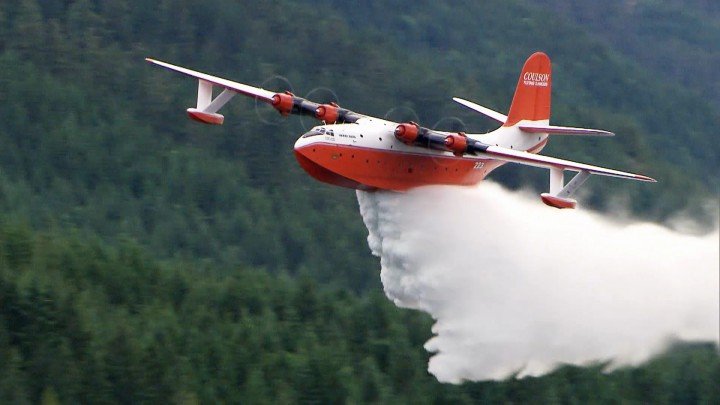
The Best of Mighty Planes
Celebrate the best of MIGHTY PLANES, including a look at the game changers, the supersonics, the lifesavers, the heavy lifters and the frontier busters.
-
Control Systems in Design and Technology
Many of us assume that control systems only exist as part of computing and design. But in fact control systems have existed ever since people started to develop and use tools. Today, as technology becomes progressively more complex and an intrinsic part of our modern work and life, we are increasingly reliant on computer controlled technology to extend human capabilities. This excellent program introduces computer controlled systems, block diagrams, open and closed loop systems, microprocessors, and sensors and actuators. In it we examine EFTPOS machines, robots, manufacturing and product control, multimedia entertainment and education and medical applications.
-
Managing a Design Project
The key to a successful design project is ensuring it is managed effectively from start to finish. The scale of some projects is truly awe inspiring, with many challenges along the way. This expert led program takes viewers through the various elements involved in managing design projects such as establishing a project plan, an action plan, time plan and finance plan, how to apply and evaluate those plans, and design project constraints. Included are interviews with Michelle Hyams from Schiavello Office Furniture and Lawrence Waterman from the London Olympics. For senior secondary and tertiary level, the production highlights the need for detailed planning, ongoing assessment of the project, and increasingly important factors – environmental for example – that need to be taken into consideration.
-

Food Chains and Food Webs
In this program we explore the dynamic relationship between plants and animals in a shared ecosystem. This presenter-led, nature documentary style program clearly explains why all living organisms need energy, and how they obtain their food and energy requirements. Using examples of food chains and food webs, describing the difference between producers and consumers and illustrating the importance of scavengers and decomposers in maintaining a healthy ecosystem, it is the perfect introduction to biological science and interconnectedness within an ecosystem. This program is also ideal for initiating discussion regarding environmental issues such as climate change, deforestation and species extinction.