The MV Paul R. Tregurtha is the longest freighter working on the Great Lakes, a thousand-foot vessel capable of carrying 68,000 tons of taconite ore pellets or 71,000 tons of coal. The reigning “Queen of the Lakes,” this immense ship was built to contend with the harsh weather conditions of North America’s inland seas (which famously caused the sinking of the Edmund Fitzgerald in 1975, killing her entire crew). The flagship of Interlake Steamship Company, the Tregurtha is a self-unloading bold carrier able to empty her cargo holds using a specially-built onboard discharge boom.
Grade levels: Senior High (10-12)
-
Classification Systems
Biologists have to be able to communicate with other biologists and be absolutely sure they are both talking about the same organism. A system of classification first proposed by Linnaeus gives them tools to do this. Recently this classification system has been further refined using studies of DNA. This program looks at how the classification system is organized and how Scientific names are arrived at. The major groups of living things are explained The dichotomous keys used by biologists to classify specimens are used and an example of constructing a key is given.
-
Emma Maersk
Step aboard the Emma Maersk for a glimpse at the adventures of the crew on a two-week, 13,000-kilometre crossing from Malaysia to Spain. At 20 storeys tall, this ship is capable of carrying millions of dollars worth of cargo in over 12,000 containers – enough to fill a freight train 70 kilometres long! Powered by the world’s largest diesel engine turning the world’s biggest propeller, this massive ship seldom stops. Every year, this magnificent vessel circumnavigates the globe seven-and-a-half times. Don’t miss this high speed, high risk seafaring adventure as the crew navigates the pirate-infested Strait of Malacca and Horn of Africa, dodges cyclones in the Indian Ocean and performs two major engine repairs at sea. But can the Emma Maersk overcome these challenges and make it through the Suez Canal to her final port in time?
-
Becrux
Unlike most cruise ships, the Becrux is a mighty ship made for four-legged passengers. With a capacity of nearly 20,000 cattle or 60,000 sheep, the Becrux is the largest custom-built livestock carrier in the world. Her expert crew and stock handlers are renowned for getting their “passengers” from ranches in Western Australia to markets in Asia, North America and the Middle East quickly, safely and in as much comfort as possible. This is no small task as the seas she often sails – the Java Sea, the Persian Gulf and the Red Sea – are the home waters of some of the world’s most dangerous pirates. Becrux’s officers and crew need to be on constant guard, while her stock experts must be equally vigilant about the health of the animals they carry. While the rare combination of cowboys and sailors makes for ongoing competition as to whom is the toughest, a bridge full of Italian officers gives Becrux a style and an enviable cuisine all her own.
-
Faust
With the ability to ferry 8,000 luxury cars, heavy trucks and tractors from one continent to another, the Faust is the biggest and the newest ocean faring vehicle carrier on the planet. This ship boasts 13 decks the size of 11 football fields to accommodate her wheeled cargo – big or small – without leaving a single scratch or a dent. Not only is her capacity impressive, but every inch of Faust is designed to make her one of the most environmentally-friendly ships afloat. And with state-of-the-art technology throughout, she’s so fully automated she hardly needs a crew. But a winter crossing of the North Atlantic requires more than high-tech instrumentation to dodge rough waves and gale force winds directly in her path. Watch as this trip puts every one of her 22-member crew to the test.
-
Tyco Resolute
Resolute and ships like her install and maintain the undersea cables that form the backbone of the international communications network. Resolute is one of the most efficient and technically advanced cable laying vessels ever built. In their first year of service, Resolute and her sister ships installed a remarkable 3500 kilometres of cable. The growing importance of telecommunications requires ever-increasing capacities for data transmission in all parts of the world.
-
Henry Larsen
The Canadian Coast Guard icebreaker Henry Larsen is a highly specialized ice-breaker. In addition to keeping shipping lanes open for commercial fishing vessels and other ships, she’s especially outfitted for search and rescue missions as well as oceanographic research in the High Arctic. This ship is a lifeline. It’s work really does make a difference between life and death, in terms of the ‘search and rescue’ work. But Henry Larsen is also a lifeline for the people of Fogo Island. If there was no icebreaker, there would be no ferry and the communities would be completely stranded.
-
Orques de Crozet, David et les Goliaths
Résumé Au large de l’archipel isolé des îles Crozet, rejoignez David Reichert, un caméraman doté d’un xtraordinaire talent pour repérer, approcher et apprivoiser les animaux les plus sauvages de la planête. Affrontant les vents violents et les eaux glacées avec un minimum de protection, il entre dans l’intimité des éléphants de mer et des orques grâce à sa connaissance de l’éthologie et parvient à les habituer àsa présence. Se produit alors le miracle : David communique avec les manchots, apaise les jeunes éléphants de mer et les transforme même en oreillers vivants. Il nage aux côtés d’orques de prês de huit tonnes et d’éléphants de mer adultes… Contexte: David REICHERT est un cinéaste animalier qui a dédié sa vie à sa passion. Spécialiste des sujets marins, familier des mers démontées, comme dans des eaux glacées, il résiste aux environnements extrêmes et possêde un vrai talent pour maîtriser les situations complexes en milieu naturel. Pour réaliser ce documentaire unique, David a passé 4 mois sous une petite tente, dans une baie isolée à plus de 1000 kilomêtres de la terre ferme en compagnie de Jean-François Barthod, un réalisateur animalier possédant une solide expérience comme chef opérateur dans le cinéma. Le résultat est un documentaire original entiêrement tourné en Super 16 mm.
-
IL ÉTAIT UNE FOIS L’INSTINCT MATERNEL
France 3 programme la premiêre apparition de “IL ETAIT UNE FOIS L’INSTINCT MATERNEL”, le lundi 20 avril 2009 à 23h55. Remarqué dans de nombreux festivals internationaux et cautionné par plusieurs autorités scientifiques, ce documentaire inclassable, mais emprunt de rigueur scientifique, ose remettre en question nombre d’idées reçues sur la maternité. Aprês plusieurs années de tournages dans plusieurs pays auprês de la grande famille des mammifêres dont nous sommes issus, il vient fouiller, au travers d’exemples pertinents, les fondations de la famille… ou de l’image que nous nous en faisons. Pêre, mêre, grand-parents … découvrez le mammifêre qui sommeille en vous.
-
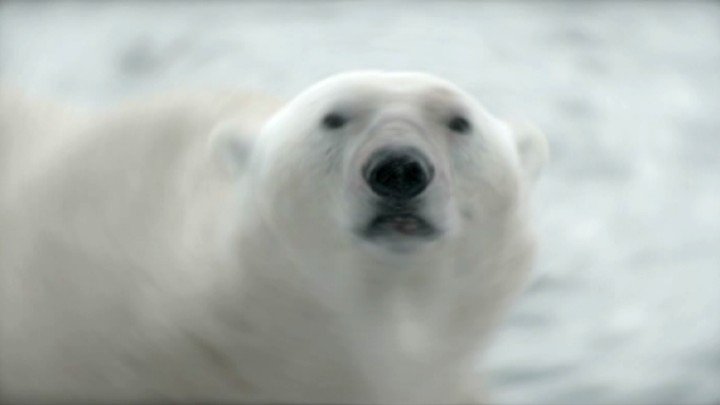
Poles
Mirages are shaping over immaculate ice self. Close up shot of a bear inhaling the frozen air. From the bear’s point of view, we understand that…he is smelling a seal. This odour is that of a young ringed seal hidden under a thin layer of snow. A few steps and paw swipes to clear the animal and uncover a young ringed seal snack. Under the ice shelf, protected from bears by several meters of frozen ice, belugas- the white whales- are hunting halibut. In their tridimensional environment, individuals can communicate the good hunting spots while kilometres apart. The chattering of these ghost hunters is continuous. At the South Pole, leopard seals hunt in silence. But they are nonetheless excellent tacticians. Their hunt is based on their excellent sight, experience and a perfect knowledge of their prey’s calendar. When do the parent penguins go off to feed at sea, when do they return, when are the young going to take their first bath and where exactly will they get into the water? The answers to these questions are all part of the leopard seal’s hunting culture. We follow his adventures under the surface of ice covered-bays. When his hunting season comes to an end at fall, the Northern spring wakes the polar bear which goes off to hunt. Our year in the lives of Pole predators comes to a close.