Subjects: Life Science

  • Operation Ouch! – S01E02

    Operation Ouch! – S01E02

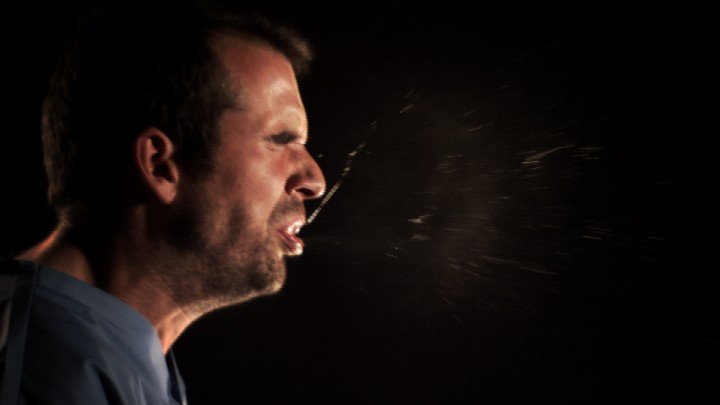
    The Doctors head into their lab to show us why it’s important to cover your mouth when you sneeze.

    Plus, Dr. Chris gets his hands on a real human brain while Dr. Xand visits the Plaster Room to see how plaster casts are applied and removed.

    In Accident & Emergency, one patient has a metal hook in her hand while another patient has a toenail stuck up his nose.

    We also meet a man who has an eye-popping ability, learn a body trick that allows you to use just one finger to stop someone from moving, and Dr. Xand goes on call with an emergency ambulance team.
  • Operation Ouch! – S01E03

    Operation Ouch! – S01E03

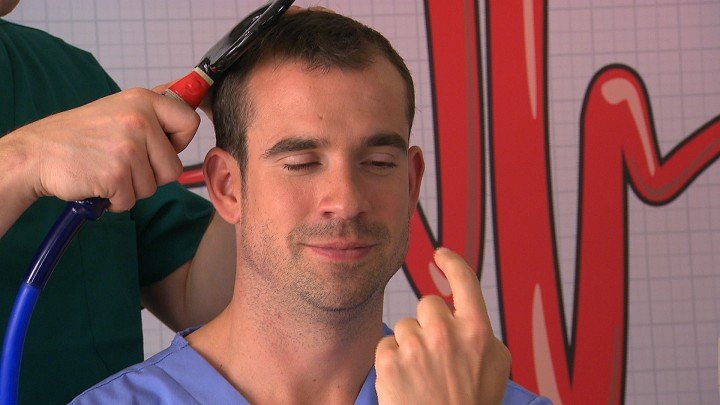
    The Doctors go into their lab and use a multipulse transcranial magnetic stimulator to discover where the signals our brain sends to the other parts of our bodies originate.

    Plus, Dr. Chris learns how leeches are still being used in modern medicine while Dr. Xand observes a surgery to remove some troublesome tonsils.

    In Accident & Emergency, one patient can’t shut her mouth because she dislocated her jaw and another patient banged his head on a railing.

    We also meet a world champion freerunner, learn an amazing body trick that can stop you being able to control the movement of your foot, and Dr. Xand goes on call with an emergency ambulance team.

  • Operation Ouch! – S01E04

    Operation Ouch! – S01E04

    The Doctors go to painful lengths to show us how pain is in your brain and how you can reduce the amount of pain you experience.

    Plus, Dr. Chris works up a sweat while investigating why we perspire and where we perspire the most, and Dr. Xand trots around in high heels in the Gait Lab to investigate the things that can affect how we walk.

    In Accident & Emergency, one patient cut the end of his finger off when he shut his hand in a car door and another patient broke his hand when he punched a wall.

    We also meet a sword swallower, learn an amazing body trick that can confuse your friends’ brains using just a couple of bowls of water, and Dr. Xand goes on call with an emergency ambulance team.

  • Real World Science: Seeds and Plants

    This visually exciting program explores the world of rocks and minerals and shares what he learns with viewers. Combing animation with live video footage, the program demonstrates how rocks are formed and how they change. Students will learn to identify common minerals and identify properties of rocks.

  • Real World Science: Brain and Nervous Systems

    In the Brain & the Nervous System viewers will learn about the three key components of the nervous system — the brain, spinal cord and nerves — all made up of special cells called neurons that transmit electrical impulses throughout the body. Theyll discover the different types of neurons — sensory, motor and associative; each with a specialized function. Reflex actions are discussed, as well as an in-depth look at the three main parts of the brain: cerebrum, cerebellum and brain stem.

  • Real World Science: Digestive and Excretory Systems

    Digestive & Excretory Systems teaches students that, for food to be of use to our bodys cells, food needs to be broken down and absorbed into the bloodstream. This is the job of the digestive system, a complex series of tools that includes teeth, saliva, bile, acids and enzymes designed to reduce nutrients to a form that can be delivered to cells. Students will also learn that waste products and indigestible materials must be removed from the body. Viewers will learn that this is the role of the excretory system, which includes the liver, lungs, kidneys and the skin.

  • Real World Science: Circulatory and Respiratory Systems

    In Circulatory & Respiratory Systems, students will discover how these two very important bodily systems work together to help keep us alive through a process called cellular respiration. A close-up look at the components of our blood: plasma, red blood cells, white blood cells, and platelets, demonstrates how critical blood is to our survival. Pumped by the heart through a vast network of vessels, our blood is the ultimate pick-up and delivery system, providing nutrients, carrying away harmful waste, and fighting against disease and infection.

  • Real World Science: Skeletal and Muscular Systems

    In Skeletal & Muscular Systems, students learn that bones and muscles work together to protect our bodies and enable us to move. Students will come to realize that bones, in addition to providing support for our bodies and protecting vital organs, is where blood is manufactured! Viewers also learn that bones are classified by shape; long, short, flat and irregular; and that there are three types of muscles; skeletal, smooth and cardiac. Colorful graphics and animation illustrate how joints work with the help of connective tissues like cartilage, ligaments and tendons.

  • Real World Science: Animal Behavior

    In this information-packed program students will learn about the behavior patterns of all types of animals including mammals, birds, insects and more. From food gathering to mating, survival instincts and sleeping habits to social behaviors, this program shows students how behaviors of each animal help them to adapt to different environments.

  • Real World Science: Habitats

    Why are habitats important? Live-Action footage of animals and colorful animation help students discover the answer. This program takes viewers around the world to explore the tundra, desert, grasslands, forests and waterways of the world, and learn about the plants and animals that live there.