Living Literature introduces students to the seminal literary texts that shaped Western culture and transcend time and place. Students are challenged to think critically and creatively about cultural traditions and to assess how they fit as individuals within these traditions. The course is taught by Jeffrey Lynch, Ph.D. and Associate Dean of the College of Arts and Humanities at Eastern Illinois University.
Subjects: Classical literature
-
Just the Facts Series – Understanding Literature
The Just the Facts: Understanding Literature series presents an innovative, lively, and contemporary approach to understanding the basic elements of fiction. In each program, a young host and hostess guide viewers through the basic elements of each genre with colorful graphics and an informative narrative from English professors. Question-and-answer sections throughout the programs reinforce the concepts presented. Just the Facts: Understanding Literature offers a unique learning experience and an effective teaching tool.
-
Fantasy Literature Series
Journey through ancient myths, epic adventures, and modern fantasy literature. From the Greek and Norse myths and Beowulf to the Arthurian legends and the Lord of the Rings, the Standard Deviants explore the classics of fantasy literature. (4 x 26:00)
-
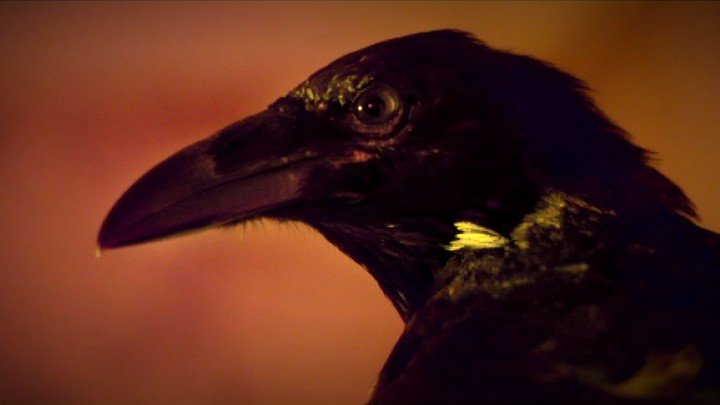
Edgar Allan Poe’s The Raven
December 1959: Poe, a young writer, has locked himself inside his seedy Hollywood motel room. Astray in his projected memories, he gets a visit from a dark bird named, ‘Nevermore.’
-
Course Overview (Summary)
The final episode review the works in the course identifies enduring themes and concerns. Highlighted members of the class choose and justify their favorite works.
-
Kafka, The Metamorphosis
Discussion focuses on the story as a modern parable, suggesting that the reality to which Gregor awakens is the truth of his life. Of what does this truth consist? In what ways can Kafka’s story be compared to “The Death of Ivan Ilych?” Students explore the story’s theme and plot, determine its purpose, and debate where the story’s climax lies in the narrative. How do elements such as pose style and tone, use of detail, and point-of-view contribute to the story’s effect? To what extent does the “rage to be normal” lead us to treat those who are different from us as non-human?
-
Dante, Inferno (Part 1)
These two lessons center on the nature of allegory, the law of symbolic retribution, and how the nature of the soul according to St. Thomas Aquinas influenced the structure of Dante’s Hell. How should one read Inferno for the first time? To what extent is Dante a new epic hero? To what extend does his journey constitute a new epic “action?” What is Inferno really about, and what was Dante’s purpose in writing it? The episode of Paolo and Francesca is singled out for particular attention. Featured interview: Professor Zyg Baranski (University of Reading)
-
Dante, Inferno (Part 2)
These two lessons center on the nature of allegory, the law of symbolic retribution, and how the nature of the soul according to St. Thomas Aquinas influenced the structure of Dante’s Hell. How should one read Inferno for the first time? To what extent is Dante a new epic hero? To what extend does his journey constitute a new epic “action?” What is Inferno really about, and what was Dante’s purpose in writing it? The episode of Paolo and Francesca is singled out for particular attention. Featured interview: Professor Zyg Baranski (University of Reading)
-
Shakespeare, Hamlet (Part 1)
Discussion centers on Hamlet’s unique prestige in Western culture as the Mt. Everest of plays, so much so that it is often referred to simply as “The Play”. What accounts for this unique prestige? How modern a play is Hamlet? What political issues does it raise? The class considers a feminist and an existential reading of the play, discussing Hamlet’s attitudes toward the sexualized maternal body and the universal fear and disgust it can evoke. “The Play” also poses the question of how to act in the world when one cannot know anything with certainty. Featured interview: Professor Mick Hattaway (University of Sheffield), author of a critical text on Shakespeare’s Hamlet
-
Shakespeare, Hamlet (Part 2)
Discussion centers on Hamlet’s unique prestige in Western culture as the Mt. Everest of plays, so much so that it is often referred to simply as “The Play”. What accounts for this unique prestige? How modern a play is Hamlet? What political issues does it raise? The class considers a feminist and an existential reading of the play, discussing Hamlet’s attitudes toward the sexualized maternal body and the universal fear and disgust it can evoke. “The Play” also poses the question of how to act in the world when one cannot know anything with certainty. Featured interview: Professor Mick Hattaway (University of Sheffield), author of a critical text on Shakespeare’s Hamlet