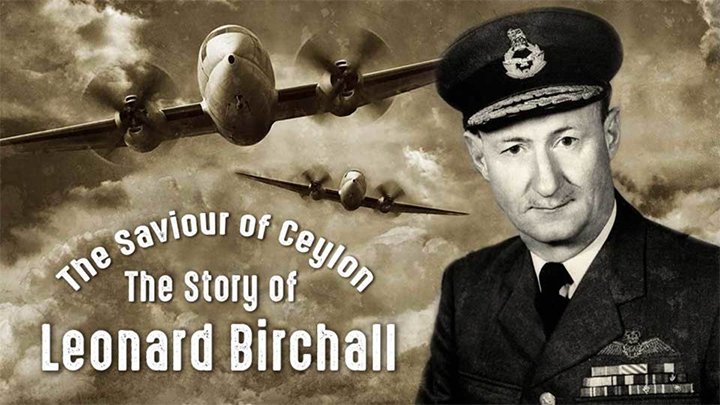
All wars produce heroes but rarely in a global conflict do the actions of one man affect the direction and possibly even the result of the whole war. In Leonard Birchall’s case that is precisely what happened. The young Canadian Squadron Leader from St. Catherines, Ontario, on patrol in the Indian Ocean in April, 1943, spotted a Japanese fleet on its way to attack the British base at Ceylon, now Sri Lanka. Birchall, knowing he would be shot down, radioed a description of the makeup of the task force back to base. He was plucked out of the ocean by the Japanese, and endured three and a half years of captivity serving as Senior Allied Officer in four Japanese prison camps. Leonard Birchall kept a detailed record of that experience in diaries which he buried – these were dug up after the war and formed the basis for a number of successful war crime trials. Winston Churchill, even before he knew Leonard Birchall’s name, or that he had survived, called him “The Saviour of Ceylon.”
Producers: Norflicks Productions Ltd.
-
Labour Pains
The documentary tells the history of the birth of the labour movement in Canada with an emphasis on the 1937 General Motors strike in Oshawa and the 1945 Ford of Canada strike in Windsor. Both of these strikes are highlighted as seminal forces in the creation of the United Auto Workers (now the Canadian Auto Workers) and throughout the hour we meet all of the key players involved, which include the politicians of the time as well as strike organizers and other union members. The program concludes with the famous Rand Formula, which eventually became the prescription for the modern day union.
-
Talking Union
Writer/producer Richard Nielsen recollects his experiences in the union movement from the 1946 Stelco strike to the role of unions in contemporary society.
-
Canada’s Sweetheart: The Saga of Hal C. Banks
Donald Britain directs and co-writes with Richard Nielsen this docu-drama of an American gangster brought in to Canada to destroy the Canadian Seaman’s Union. A co-production with the National Film Board. Winner of the 1987 Annick Award.
WARNING: This program contains language that may be offensive to some people. Please review before use in the classroom.
-
A Heaven on Earth
A Heaven on Earth is the story of the Co-operative Commonwealth Federation, a uniquely Canadian social and political movement spanning years from the Great Depression to the early years of the 1960’s. The film looks at the personalities involved their visions of a “heaven on earth” – a world characterized by co-operation, peace, equity and social justice – and brings to life the dramatic social and political upheavals which shaped the period. Highlighting the movement’s contributions to social programs currently under attack, A Heaven on Earth contains a crucially important message for contemporary audiences.
-
Defying the Law
On July 14, 1946, a group of steelworkers poured out of Hamilton’s Playhouse Theater and set up pickets around the country’s largest steel mill. Their action sparked one of the most important strikes in Canada’s history – a strike which many believe to mark the birth of the modern Canadian labour movement. On the previous Friday, the steel industry had been put under government control, and all employees threatened with imprisonment were they to strike. Defying the Law, an account of that long summer, charts the historic struggle for union recognition against both government and an historically powerful industry.
-
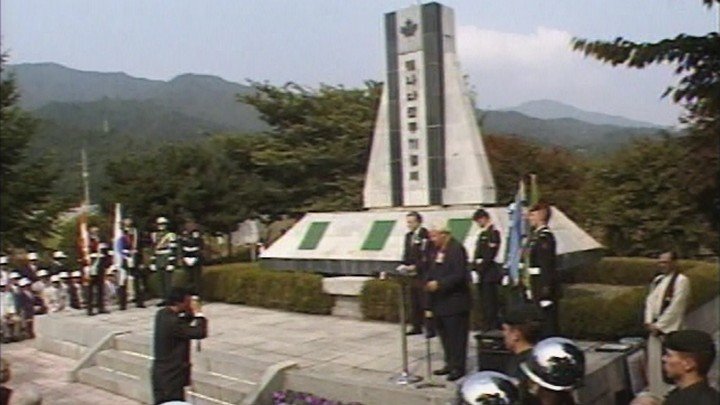
Canadians Remember: A War for Peace
This video explores the experiences of a group of Canadian youth who travel to Korea, developing a deeper respect for what Canadian Veterans went through to help protect South Korea.
-
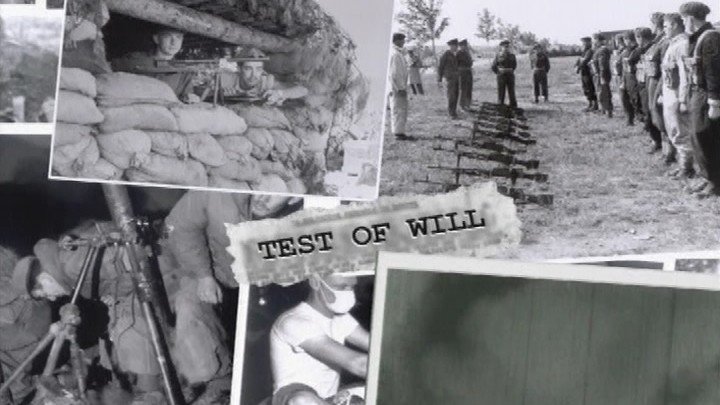
Test of Will: Canada in Korea 1950-1953 DVD
A DVD focusing on Canada’s role in the Korean War. Archival photographs, film footage, and radio reports are combined with letters, speeches, articles, and reports from the time read by off-camera actors who assume the identity of the author of the written material. It is the little known story of the Canadian involvement in Korea, the first war in which Canadian troops served directly under foreign (American) command as part of a United Nations force. It is a neglected war, largely because the number of soldiers involved and casualties suffered paled when compared with the much larger national engagement in the two World Wars. Test of Will: Canada in Korea is not only the history of the Canadians; it is also the history of world events, illustrating the struggle between democracy and communism taking place at the time. It is also very much a story of the Korean people themselves; of incredible suffering and loss, but also of incredible courage and strength.
The DVD also includes A War for Peace, which explores the experiences of a group of Canadian youth who travel to Korea, developing a deeper respect for what Canadian Veterans went through to help protect South Korea.
-
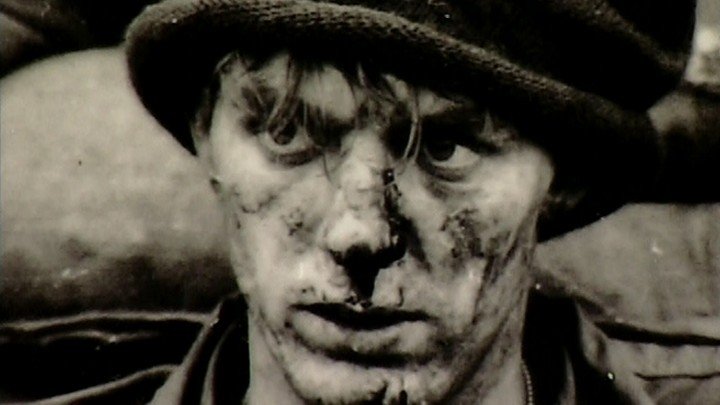
Test of Will: Canada in Korea 1950-1953
A 90-minute documentary, focusing on Canada’s role in the Korean War. Archival photographs, film footage, and radio reports are combined with letters, speeches, articles, and reports from the time read by off-camera actors who assume the identity of the author of the written material. It is the little known story of the Canadian involvement in Korea, the first war in which Canadian troops served directly under foreign (American) command as part of a United Nations force. It is a neglected war, largely because the number of soldiers involved and casualties suffered paled when compared with the much larger national engagement in the two World Wars. Test of Will: Canada in Korea is not only the history of the Canadians; it is also the history of world events, illustrating the struggle between democracy and communism taking place at the time. It is also very much a story of the Korean people themselves; of incredible suffering and loss, but also of incredible courage and strength.
-
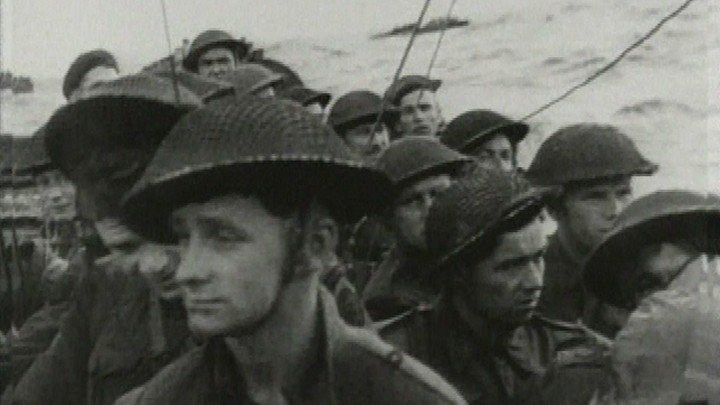
Liberation – 1944
No Price Too High chronicles the history of Canadian participation in the Second World War. Episode one commences with the unveiling of the Vimy Memorial, and episode six ends with victory in 1945. The six-hour series has a logical thematic structure designed to cover all the principle areas of Canadian participation.