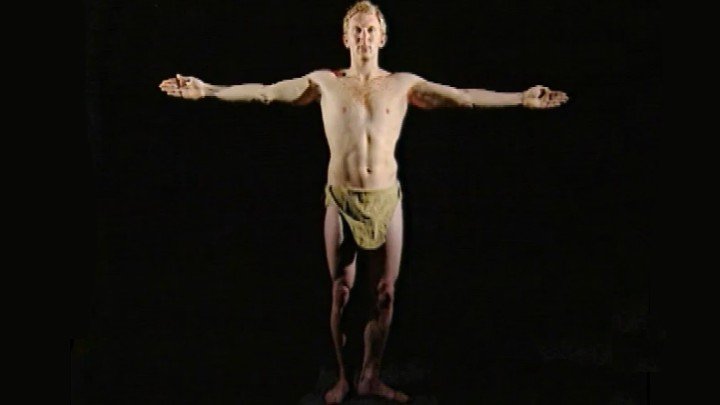
From the tiniest cells to the largest organ systems, the human body is a complex organism that is capable of both power and grace. When we think of a ballerina, we might conjure images of grace and fluidity. But such elegance relies upon the strength and power of the structures within the body. When we study the human body, we have to ask ourselves not only “How is it structured?” but also “Why does it work that way?” The human body’s form and function are both complementary and interrelated-they compromise in many ways. These are questions that you should ask yourself in every lesson-the relation between form and function is a central theme throughout this course.
Producers: Coast Learning Systems
-
Basic Chemistry & the Cellular Level of Organization
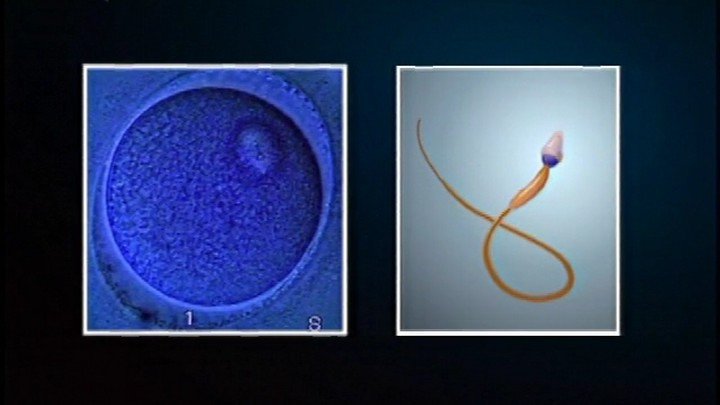
During the initial stages of life, one male cell and one female cell combine and set the stage for cell division. Cells continue to divide and differentiate and cause us to grow-our bones get longer and our muscles and organs get bigger. Because our tissues are made of cells, and our organs made of tissues, more cells must be created in order for us to develop and grow. Through a delicate balance of chemistry and cell division, a mature human being develops and is ultimately comprised of about 75 trillion cells. In this lesson, you’ll learn about how atoms play a part in the chemistry that makes life possible and the ways that cells function and divide.
-
Tissues & the Integumentary System
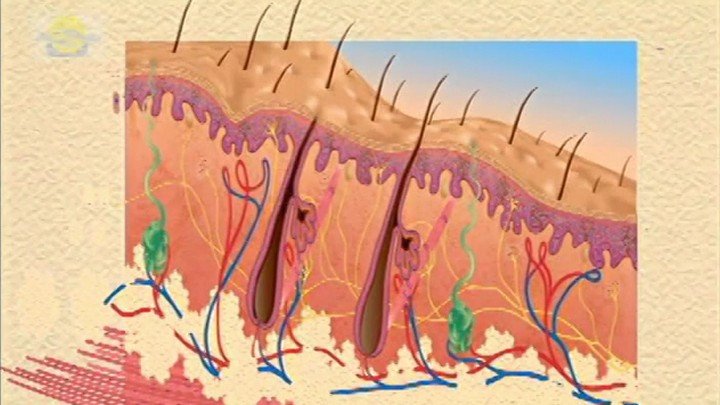
As you learned in Lesson 1, there are different levels of organization in the human body-from the cellular level to the organism level. Tissues are comprised of a collection of cells that have a common function; organs are comprised of two or more common tissues, and organ systems are comprised of organs and their accessory structures. In Lesson 2, you studied the chemical and cellular levels of organization. In this lesson, you’ll further your study of organization and learn about the four types of tissues in the human body. At the next level of organization, we’ll study the largest organ in the human body-the skin. Finally, you’ll begin your study of an organ system-the integumentary system, which contains the skin and its accessory organs.
-
Premodern Humans
Around 780,000 years ago a new species of Homo appears, perhaps descended from the hominins that lived in Spain and Italy between 900,000 and 800,000 years ago. This is time period, called the Middle Pleistocene, is marked by alternations of glaciations and interglacials. The new species is called Homo heidelbergensis. Around 125,000 Homo heidelbergensis gives rise to the Neandertals. The Neandertals are the main focus of this video lesson. You will see that the Neandertals were a robust people adapted for a cold, harsh environment. Their survival depended on more than just biology, however. A major factor to their survival was their stone tool culture, known as the Mousterian. In addition, the fact that they transported raw materials during their migrations to make future tools demonstrated forward planning.
-
Origin & Dispersal of Modern Humans
The main question of physical anthropology since its origins in the 1770s was the origin of modern humans. At that time this was in reference to the different populations of humans. Today it refers to our origins as a species in evolutionary time. This video begins by introducing you to the three current models for human origins. Then a physical comparison is made between modern humans and Neandertals and you will see that it is in the brain case that we differ the most. You will journey to southern Ethiopia to see one of the earliest modern humans, discovered in 1967, but forgotten until recently. Associated with modern humans is a great advancement in technology that marks the Upper Paleolithic. The video ends with researchers discussing the advent of art and personal adornment and what this might have meant to the people of the Upper Paleolithic.
-
Patterns of Variation
The video begins with comments on some instances of ethnic genocide that have occurred in the past in the Sudan, Rwanda, Bosnia, and Nazi Germany during World War II, and relates these occurrences to the concept of ?race,? a concept that is based on physical differences between groups. It defines the everyday usage of the word ?race? and includes its biological definition, which leads to the conclusion that the word and concept of ?race? cannot apply to Homo sapiens because, as is well understood, there are no subspecies of Homo sapiens. The video then briefly explains the historical context of how the concept of race emerged among European explorers during the sixteenth century. And, it explains that today anthropologists and scholars look beyond visible physical differences to explain human variation, that they analyze genetics and DNA, the cornerstone of genetic studies, to describe and understand human diversity.
-
Patterns of Adaptation
How do humans adapt to environmental challenges? In this video, experts explore this question from many angles. The difference between acclimatization and adaptation is explained. Nina Jablonski explains skin color function and adaptations related to UV radiation levels, the vitamin D hypothesis, and preventing the loss of folate in the body. High-altitude adaptations are also discussed, along with responses to heat and cold stressors. In the last segment, the evolutionary dance between humans and their pathogens is brought to light. The interwoven interactions between human cultural activities, and the evolution of new pathogens, as well as the evolution of drug resistance in existing pathogens are discussed.
-
Legacies of Human Evolutionary History
The interaction between human biology and culture, and human impact on the environment are discussed is this eye-opening video. It begins with a discussion of human life history from birth to senescence. The biocultural evolution of dietary patterns is demonstrated with an emphasis on the ancestral diet and the influence of agricultural practices on modern diets. The impact of these changes on human health is also discussed. Finally, Melvin J. Konner takes a look at human interaction with other organisms and the environment. He touches on antibiotic resistance, pollution, habitat destruction and the loss of biodiversity, mass extinctions, and global warming, and how we can take steps to reduce human impact on the earth.
-
Applied Anthropology
The video opens by defining applied anthropology as a field of study in which anthropological knowledge and methods are used to analyze and solve practical problems. In its three segments, the video gives clear and varied examples of where applied anthropology is used in the workforce and demonstrates how applied anthropology fits within all four subfields of anthropology?physical (or biological) anthropology, cultural anthropology, linguistic anthropology, and archaeology.
-
Physical Anthropology: The Evolving Human
Physical Anthropology: The Evolving Human provides students with an understanding of human evolution and diversity from a biological perspective. While new techniques and discoveries are continuing to alter our understanding of the human species and its place in the biological world, this course provides the student with essential tools to appreciate the key theoretical and methodological issues involved in this subdiscipline of anthropology.