Digestive & Excretory Systems teaches students that, for food to be of use to our bodys cells, food needs to be broken down and absorbed into the bloodstream. This is the job of the digestive system, a complex series of tools that includes teeth, saliva, bile, acids and enzymes designed to reduce nutrients to a form that can be delivered to cells. Students will also learn that waste products and indigestible materials must be removed from the body. Viewers will learn that this is the role of the excretory system, which includes the liver, lungs, kidneys and the skin.
Languages: English
-
Real World Science: Circulatory and Respiratory Systems
In Circulatory & Respiratory Systems, students will discover how these two very important bodily systems work together to help keep us alive through a process called cellular respiration. A close-up look at the components of our blood: plasma, red blood cells, white blood cells, and platelets, demonstrates how critical blood is to our survival. Pumped by the heart through a vast network of vessels, our blood is the ultimate pick-up and delivery system, providing nutrients, carrying away harmful waste, and fighting against disease and infection.
-
Real World Science: Skeletal and Muscular Systems
In Skeletal & Muscular Systems, students learn that bones and muscles work together to protect our bodies and enable us to move. Students will come to realize that bones, in addition to providing support for our bodies and protecting vital organs, is where blood is manufactured! Viewers also learn that bones are classified by shape; long, short, flat and irregular; and that there are three types of muscles; skeletal, smooth and cardiac. Colorful graphics and animation illustrate how joints work with the help of connective tissues like cartilage, ligaments and tendons.
-
Real World Science: Light
Using real world demonstrations and colorful graphics, Real World Science: Light teaches students the different properties of light, pertinent definitions and how light travels. Students will learn how different mediums can affect light, resulting in reflection, refraction and absorption, and they will explore the color spectrum using prisms and paints.
-
Real World Science: The Scientific Method
We solve problems every day. We also ask questions every day. In order to best come up with answers for our questions or solve our problems, we use a process. The process known as the Scientific Method gives us a format for engaging in a step-by-step approach to come up with a reasonable solution. It is important for students to understand and use the Scientific Method when solving problems and answering questions, to ensure that they identify reliable solutions. By viewing the video and discussing the concepts presented, students will enhance their knowledge about the scientific method. The video presents general information about the scientific method, as well as identifying the steps and giving real world examples of the scientific method being used to solve everyday problems or answer questions.
-
Real World Science: Weather
Viewers take a trip above the earth’s atmosphere to learn about weather around the world. Students will come to understand the relationship between water, air and heat and how they interact to make weather happen. The terms atmosphere, condensation, evaporation and precipitation are explained through animated diagrams. This program also talks about meteorologists and the instruments they use to predict weather.
-
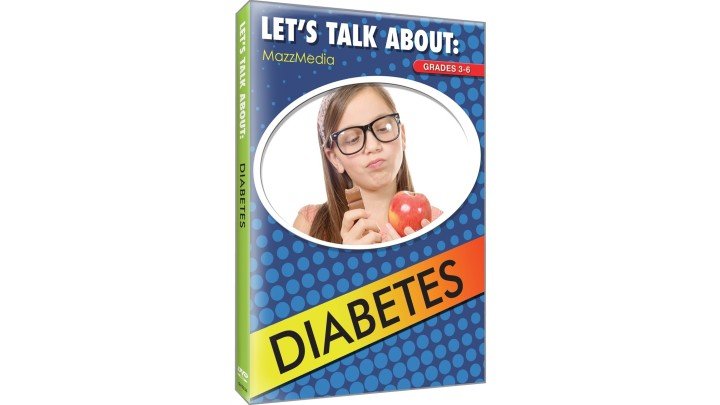
Let’s Talk About: Diabetes
Let’s Talk About Diabetes is designed to increase a student’s awareness of diabetes by presenting information that will help them better understand diabetes and more importantly know the risk factors to prevent getting the disease. Colourful animation and vivid graphics help demonstrate how energy gets to your body’s cells, and the roles of the pancreas, glucoe, blood, and insulin.
-
Real World Science: Seeds and Plants
This visually exciting program explores the world of rocks and minerals and shares what he learns with viewers. Combing animation with live video footage, the program demonstrates how rocks are formed and how they change. Students will learn to identify common minerals and identify properties of rocks.
-
Real World Science: Simple Machines
Students learn to define and recognize the six simple machines: the inclined plane, the wedge, the screw, the lever, the wheel and axle, and the pulley. Real life situations demonstrate the function and purpose of each machine. Students learn the definition of work and the relationship between force and distance.
-
Real World Science: Sound
Helping children relate to the topics they study is what the Real World Science series of videos does best. Real World Science: Sound helps students learn the principles of sound, the range of human hearing and significant terms, as they discover the science behind everyday sounds. Students will also travel deep into the ocean and high into the skies in search of creatures that use echolocation.