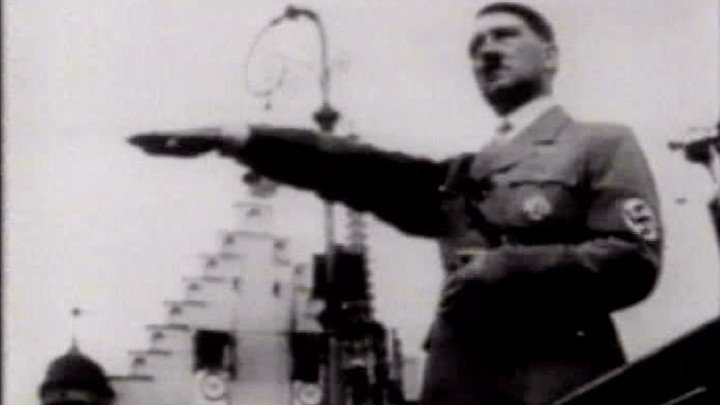
In Germany between 1933 and 1945, every aspect of life was influenced or affected in some way by Adolf Hitler and his Nazi Party. In some cases, this worked for the betterment of the average German – ordering economic effort, stimulating industry, creating employment, improving standards of living, and re-igniting a sense of pride in the nation. In other cases totalitarian control directed the nation down paths which had an opposite effect. Through the use of rare historical footage from archives around the world, this video succinctly portrays the essential nature of life under Adolf Hitler, in all its major guises.
Languages: English
-
Hitting the Ball
What does it take to hit the ball? What are the biomechanics of hitting the ball better? What do sports like tennis and cricket have in common? Covered in this video are sports ranging from Baseball, Golf, Cricket, Softball, Tennis, Squash and Table Tennis. Explained in this video are the biomechanical ingredients for hitting the ball. Topics include stance and footwork; eye-hand coordination; form and weight transfer; strength and power generation; timing and anticipation; flight of the ball, bounce and spin; spinning the ball; backhands; physics of the ‘sweet spot’. Featuring some of the top junior athletes in sports such as tennis, cricket and squash.
-
Holding Electrons
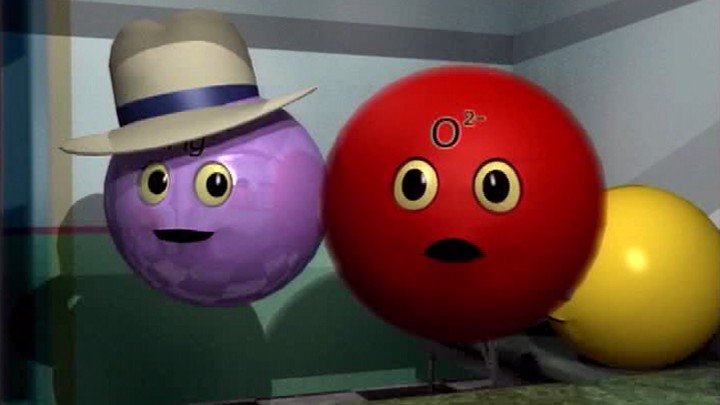
The attraction of each electron in an atom is unique. This is due to the charge on the nucleus, the distance and repulsion by other electrons.
IONIZATION ENERGY. The work required to remove an electron for an atom. No two electrons in an atom have the same value. This increases at certain stages leading to the energy shell model of the atom. ELECTRO NEGATIVITY. This is the number describing a particle’s ability to retain an electron in a chemical reaction. It describes and predicts the degree of polarity of a chemical bond. ACTIVITY SERIES. The ability of atoms to hold onto their electrons is also expressed in the activity series of the elements. The concepts of electron transfer and voltage production in cells are explored at their simplest levels. -
How a Plant Works
We look at a range of plants from the small to the large, the primitive to the modern and explore the following plant processes: energy, breathing, the root system, reproduction.
-
The Human Body
This entertaining video demonstrates how the component parts of our bodies work together like an incredible machine. It explains the structure and function of various body systems and presents simple experiments and activities demonstrated by students. The video covers the topics : The human body, skeleton, muscles, nervous system, brain, blood circulatory system, heart, digestive system, waste disposal, and respiratory system.
-

Handheld Power Tools – Part Two
Part Two focuses on power drills, screwdrivers, hammer drills, routers, and sanders. Special sections on safety, with emphasis on the appropriate use of power extension cords and harmful noise levels are included. Proper safety procedures are followed during the operation of each tool and the use of jigs, various cutting bits and grades of abrasives are covered.
-

Gene Tech Tapes – Pt 5
Featuring leading international ethicists and scientists, this compilation of interviews canvases key ethical issues in the controversial world of new agricultural genetic technologies. Topics include the question of regulation; genetic foods are needed to help feed the world; should we label genetically modified foods; risks to health and environment.
-
History of the Atom Part Two
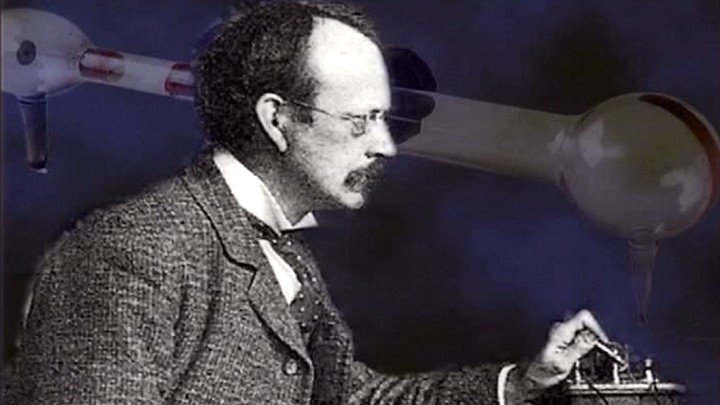
Some of the key experiments performed between 1870 and 1940 which established the structure of the atom. Cathode ray tubes, canal rays, mass spectrometer, Thompson’s plum pudding model, Rutherford’s gold foil experiment, the Bohr model and the orbitals and quantum mechanical model.
-

Exploring Genres
An imaginative and entertaining resource to help students understand genre and the different components of genre. When Scoop, an out-dated whodunit character from the 1940s loses his genre, he journeys through several different genres including a fairy tale, science-fiction, gothic, adventure, rap, and romance. This video explores: why do writers choose different genres; what are the components of each genre; setting; characters; style; and story-line.
-
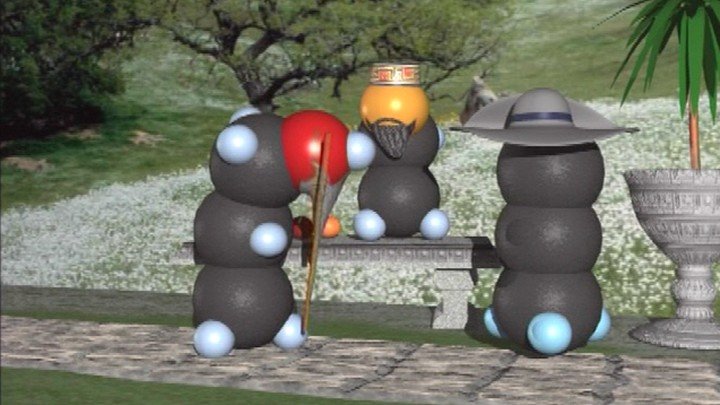
History of the Atom
North American Version. The crazy atoms put on a pantomime, telling the history of Atomic Theory from their point of view! A fully animated program with lots of information about such people as: Leucippus, Empedocles, Aristotle, Epicurus, Gassendi, Boyle, Newton, Priestly, Lavoisier, and Dalton.