What is a family? A generation ago, maybe the answer was unambiguous, but today the word evokes a whole range of possibilities. This program is a thought-provoking and intelligent look at the changing roles, structures and functions of the family throughout time and up to the present day. Featuring expert opinion, surprising statistics and the honest, heart-felt thoughts of four very different Australian families, this is an insightful examination of what it means to belong to a family and the range of possible social, emotional, environmental, and economic and health considerations that have shaped family structures. Finishing up with a look at the family of the future (are we heading towards ‘virtual families’?) this is a terrific resource to engage questioning young minds on this vital aspect of a healthy, modern and diverse society. Chapters: 1.Introduction 2.Definations of Family 3.Family Structures 4.Changing Roles 5.Key Reasons for Change 6.Families of the Future 7.Conclusion
Languages: English
-
Language
An Indonesian legend claims that monkeys can speak but they prefer to stay quiet. Do animals have languages that we don’t understand? Is it just a question of getting the right dictionary or is language the one thing that separates humans from the rest of the animal kingdom? Birds sing, lions roar and chimpanzees chatter but do these noises mean anything? This one-hour documentary takes viewers into the wild to listen to nature’s noisemakers and meet some of the scientists who spend their days trying to have conversations with animals. From parrots to killer whales we find out who is saying what to whom and explore whether there is such a thing as animal language.
-
David Macaulay: Pyramid
How did ancient Egyptians build the Great Pyramid at Giza, joining two million blocks of heavy stone with amazing precision? Who were the leaders who built these enormous structures, and what did these tombs signify? Host David Macaulay explores the history, mythology, and religions of Egypt’s people, combining live footage and animation. Take a rare look at the mummy of Ramses II and buried treasure in the sacred Valley of the Kings.
-
Brain Fitness 2: Sight and Sound – Public Performance
This program, specifically designed to help people get the most from their vision and hearing as they age, considers how these senses change throughout life and what people can do to keep them healthy and fully functional.
-
David Macaulay: Cathedral
Author David Macaulay hosts CATHEDRAL, based on his award-winning book. Using a combination of spectacular location sequences and cinema-quality animation, the program surveys France’s most famous churches. Travel back to 1214 to explore the design of Notre Dame de Beaulieu, a representative Gothic cathedral. The program tells period tales revealing fascinating stories of life and death, faith and despair, prosperity, and intrigue.
-
David Macaulay: Castle
CASTLE combines colorful animation with live-action documentary sequences to tell the story of a 13th-century Welsh castle. Author David Macaulay, who wrote and illustrated the best-selling book of the same title, leads viewers on a castle tour, explaining its cultural and sociological significance and its architectural design. Detailed animation dramatizes the building of the castle and portrays the lifestyle of the early inhabitants.
-
Death or Canada: Fleeing the Famine
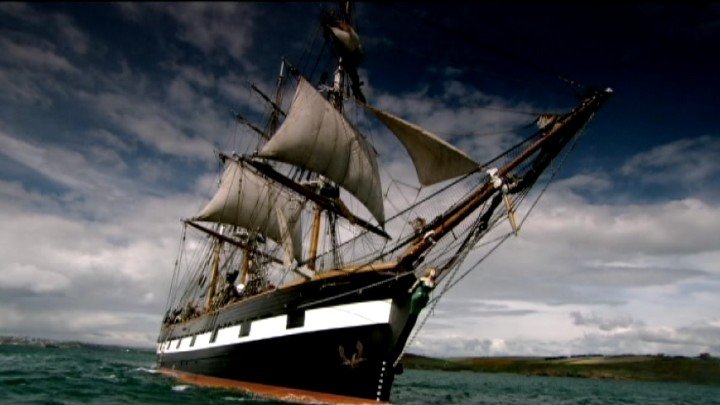
It’s been called the most traumatic event in Toronto’s history. In the summer of 1847, nearly 40,000 Irish famine refugees flooded the city, threatening to overwhelm the local population of only 20,000. A typhus epidemic followed and by the fall, more than 1,000 had died. It remains the single largest loss of life in the city’s history and the bodies of those who died are buried anonymously under a school playground in Toronto’s downtown east end. The two-hour docudrama begins in Ireland and finishes in Canada. It follows the journey of the Willis family, a family of six who left Ireland in the worst year of the famine and came to the new world in search of a better life.
-
Acids and Bases Around the Home
This program familiarises students with the features of acids and bases, and discusses their physical and chemical properties. The pH scale is introduced with examples of strong and weak acids and bases and the concept of neutral substances is explored. The use of indicators to test the pH of acids and bases is explained, as well as showing the variety of indicators available and their specific uses. Students are shown how to make their own red cabbage indicator in the kitchen, and examples of acids and bases commonly found in the home are discussed. A description of neutralisation reactions and their products concludes the program.
-
An Introduction to Biodiversity
The introductory phase introduces biodiversity to the students and emphasizes, with examples, the diversity and variability of living things. Once students are made aware of the impacts on biodiversity, they can then be presented with practical methods where individuals and community groups can work towards overcoming current impacts on biodiversity. By detailing positive examples, students are then encouraged to think for their future and the future of their community.
-
Designer Genes: The Science and Ethics
Since its discovery in 1953 mankind has been increasingly fascinated with DNA, the genetic blueprint. From the selective breeding of plants and animals in agriculture, through to the production of recombinant proteins for medical purposes, and more recently, the cloning of animals, science has investigated ways of manipulating the basic genetic code. This program outlines the basic tools/techniques for manipulation of DNA and how these are being used to ask fundamental questions about how genes work. From a more applied angle we take a tour of the myriad ways these advances are being utilized in medicine, agriculture and the environment. Together with its applications we discuss the range of ethical questions arising from genetic engineering and the manipulation of DNA to produce so called “designer genes”