This program looks at issues such as reductionism, correlation and causation, the use of non human animals in research, science and psychology and more. Presented by Dr Steven Taylor and chapterised for ease of use, this resource will be invaluable for all students.
Grade levels: Senior High (10-12)
-
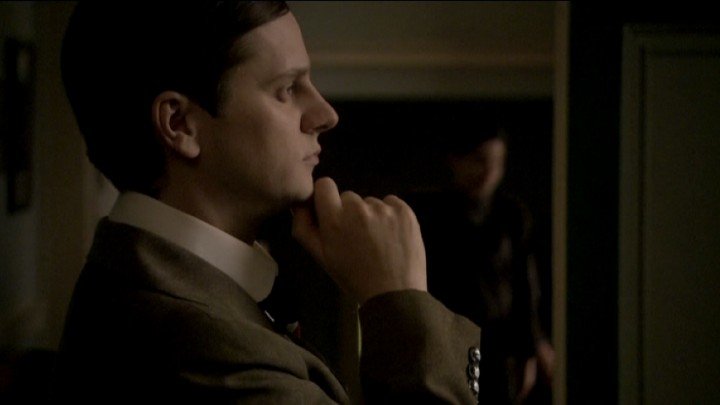
1916, Episode 7: P.H. Pearse
“They gave their lives for Ireland.” The 1916 Easter Rising changed the course of Irish history and at the heart of the story of the Rising are the seven men who put their names to the Proclamation of the Irish Republic. By signing the Proclamation each man knew they were committing themselves to bloody rebellion, and in all likelihood signing their own death warrant.
-
The Cycles: Water, Carbon, Nitrogen, Phosphorus
Change is a constant of life. The natural cycles that balance and regulate our Earth and atmosphere provide the necessary conditions for sustaining a diverse range of life forms on the planet. But what actually occurs in these cycles? The Cycles Collection looks at the critical role the carbon, nitrogen, phosphorous and water cycles play in the life of plants, animals, bacteria and our planet. This motion-graphics driven program simply yet clearly explains the key stages and processes of each cycle and why the cycles are so important to all life on our planet. An ideal resource for viewers seeking a scientific understanding of these cycles.
-
Acids and Bases
Acids and bases are all around us. This program features the following: – Early theories of Arrenhius and Lowry-Bronsted. – Valence structures. – Exposed protons and proton transfer. – Diprotic and triprotic acids linked to structures. – Amphiprotic example given by hydrogen sulphate ion. – The pH scale and the use of indicators to measure pH. – Conjugate pairs and strengths of acids with strong acids giving weak conjugate bases. – Standard reactions: acid + metal, acid + oxide, acid + carbonate, acid + hydrogen carbonate.
-
Cutting Their Own Cloth: Entrepreneurial Clothing Designers
In this program, we look at two enterprising young sisters turn a lost opportunity into a commercial gain. Twin sisters, Lou and Sophie McDermott, after missing out on the fashion TAFE course of their choice, have set up their own successful business designing and manufacturing club wear. The program examines the processes of setting up a small business from scratch, the issue of mass marketing versus niche marketing, their inspirations for designs, the logistics of manufacturing and the decisions they now have to make to expand the business and keep ahead in a highly competitive market.
-
Daily Café Operations: Day in the Life of a Café
A café culture is developing in our country with new cafes springing up on a weekly basis. There are many different types, but all cafés have similar underlying principles of what is involved in their day to day running. We take a look at Provisions Café and the daily operations a café undertakes such as; opening procedures, a typical day, café skills, café job qualifications, and closing procedures.
-
Dealing with Difficult Customers
This program covers important principles in dealing with difficult customers within the customer service industry. Included are feature interviews with service and training professionals from Safeway/Woolworths, The Windsor Hotel Melbourne, Jennifer Allcorn – difficult customer specialist from Gordon TAFE, and the 2004 Best in Australia Industry Award winner, Melbourne restaurant Jacques Reymond. The program offers sound advice for dealing with difficult customers in an easy to understand and practical way. Various role plays are included to demonstrate points and interviews with professionals who work in a variety of areas within the customer service industry. It is an informative mix of expert knowledge with excellent examples on how to deal with difficult customers.
-
Elements and Principles of Design
This program explains the elements used in visual design and then explains how these can be arranged and organised using the principles of design. It draws on real life examples used in 2D visual communications and designs: poster, information, web and magazines and 3D: product and built environments. Diverse descriptions of each element and principle using both theoretical and practical explanations are included in this program. Examples of the impact of the use of the elements and principles including traditional theories and how they are successfully used throughout the evolution of design are provided throughout this presentation.
-
Equilibrium: The Concepts
Starting with defining reversible reactions, this program covers the basic concepts of chemical equilibrium and the equilibrium law. Examples and analogies are used throughout to represent the concept of equilibrium, including: movement of cars in and out of a car park; movement of a person walking the opposite way to a moving walkway; and the movement of people on and off paddleboats. Sample calculations are provided, with stopping points suggested so students can tackle a similar calculation. Finally, the program considers what an equilibrium constant indicates about a reaction – in terms of the relative quantities of reactants and products present at equilibrium. Carbon monoxide in the bloodstream is used to illustrate this point
-
Ethics and Social Responsibility in Business
Increasingly consumers expect businesses to operate in an ethical and socially responsible manner. Many businesses abide by a Code of Conduct, either company-specific, or an industry standard. This program differentiates between ethical behaviour and social responsibility, showing two businesses as examples. Firstly, ‘Bendigo Bank’ initiated the concept of Community Banks. This has proved successful with customers in small communities who suffered when the big banks left town. The second case study, ‘The Body Shop’, has a reputation for helping the community. Attitudes to their staff and the wider community are explained with clear examples. This program delves into positive aspects of businesses, which often go unnoticed in today’s global world.