The Murray Darling Basin is a vast fertile region in the south-east of New South Wales. One of the world’s longest river systems, it is host to a thriving agricultural region and a fascinating human history. Intensive farming ever since the 1800’s is now taking its toll on the environment. If the region is to continue as an agricultural bowl then the issue of sustainable development needs to be addressed.
Grade levels: Senior High (10-12)
-
Sons et Phenomenes Vibratratoires
La physique de la musique nous emmene dans un voyage derriere la beaute et l’inspiration de la musique afin d’explorer ses principles scientifiques. Nous examinons une large gamme d’instruments, allant du violon classique au ‘didjeridoo’ et au synthetiseur pur illustrer les concepts et les formules des ondes sonores. L’oscilloscope a rayons cathodiques est largement utilise pour demontrer comment les notes musicales complexes sont construites a partir de formes d’ondes plus simples.
-
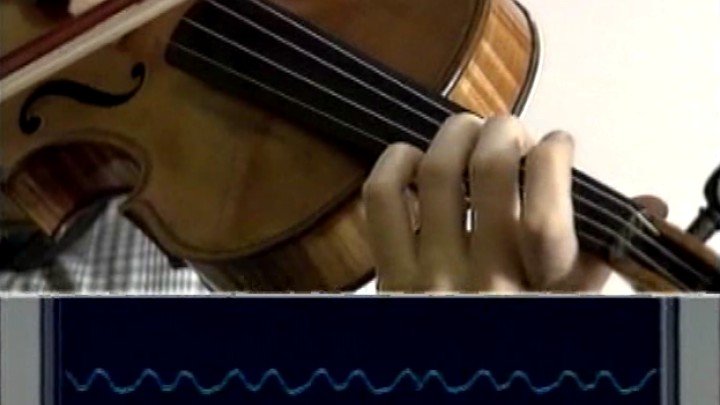
Physics of Music
Topics include wave nature of sound, sound on a CRO; music versus noise; pitch, frequency, amplitude, wavelength; musical scale, octaves; hearing and decibel scale; timbre of voice and other instruments explained by waveforms on CRO; interference & superposition producing beats; strings, wind, reed, and percussion.
-
Narrative Structures
Narrative Structures explores the necessary ingredients in writing better pieces of Narrative fiction. What are the better strategies for telling your story in a more interesting way? A must for students of Creative Writing. Topic Areas: what is a narrative, and how is it different to a story or a plot; setting. What do you need to set up a piece of narrative fiction; describing characters; thematic concern.; the three act structure explained, what is a three act structure, and how is it used?
-
Nature of Matter
Some of the key experiments performed between 1870 and 1940 which established the structure of the atom. Cathode ray tubes, canal rays, mass spectrometer, Thompson’s plum pudding model, Rutherford’s gold foil experiment, the Bohr model and the orbitals and quantumz mechanical model.
-
Non-Ferrous Metals
A comprehensive introduction to non-ferrous metals and their uses: what are non ferrous metal; raw materials: main sources world-wide; primary production: converting raw materials into useful materials; physical and chemical properties, methods of testing; secondary processing: methods of turning metals into products; properties & uses of : gold, silver, copper, brass, aluminum, magnesium, tin, titanium, zinc; properties and uses of major alloying metals: chromium, nickel, tungsten, vanadium; selecting of materials: importance of matching end-use requirements with material properties; recycling: importance and methods.
-
Multicultural Food
This video is an international journey through four different cultures by way of their traditional foods. It explores the influences of religion, landscape, lifestyles, and ingredients on food presentation and preparation from Japan, First Nations, Lebanon, and Italy.
-
Millikans Oil Drop Experiment
Two experiments are described and filmed. Topics include using static drops to balance mg against nqe; plotting voltages on drops; falling drops give size of drop; reasons for experimental error; Millikan’s questionable scientific method; the remarkable accuracy of Millikan’s work.
-
Mining in Canada
Topics covered include the mining process, open pit & underground; the economy, we look at four mining towns to see the cashflow generated by a mine. Also the flow on effect on jobs and services; the environment, acid rock drainage produced and treated at a shut down mine. Revegetating rock and tailings dumps. Acid rain; the social life in a mining town and recovery after a mine closure.
-
The Magic of Chemistry
Witches cauldron – sublimation of dry ice; nylon rope – polymerization; cloth dyeing – structure affinity relationships; sea water flasks; liquid oxygen; chromium trioxide/ethanol; gun cotton; pouring race; “Old Nassau”; chemical rainbow; oxidation of methanol; oscillating reactions; flash bulbs; luminol, flash bang tubes. The 1988 Nyholm Lecture.