Like us, animals are exposed to parasites, bacteria and viruses – the germs which cause disease. How do they survive these attacks ? Recent research and observation have shown that animals use plant and insect substances to treat themselves – not only do they apply things to their skin, they actually treat themselves by feeding on things not normally part of their diets. Capuchin monkeys rub citrus fruit on their fur, caterpillars eat poison hemlock, herbivorous red deer have even been seen chewing the legs off live seabirds. This film takes off around the world to discover how animals use medicine, it questions what notions they have about health and how medical knowledge is passed on from one generation to the next. In doing so, the film also asks what we can learn from animals about medicine.
Grade levels: Senior High (10-12)
-
Adoption
Altruism, an act that bestows a benefit on the recipient while conferring a cost to the actor, is one of the central paradoxes of evolution. In the wild, where only the fittest survive, adopting other animals’ offspring is not really in line with Darwin’s theory of evolution. And yet, amongst bees, dolphins, lions and several primate species, altruism may go as far as adoption. In the case of social insects, parent substitution was a flaw in Darwin’s theory of evolution by natural selection: the biologist noticed that non-reproductive insects who adopted and helped young ones, brought a large portion of genetic baggage from their parents. Darwin had to broaden his theory to the family group. For mammals, including men, what advantage is there in the act of adoption? In the years following the adoption, does the adopted individual contribute to the foster parents’ survival and vice versa? The controversy at the heart of this documentary continues to be debated in today’s scientific world. While raising these different questions, this documentary will study each case separately because each adoption behaviour has evolved independently forming its own pattern, its own benefit and even…its own disadvantages.
-
Developing a Career Portfolio
Years before someone lands their first job they should be putting serious thought into the development of their career portfolio. A career portfolio is a collection of documents that provide evidence of a job seeker’s interests and skills both specific to a particular job and generic to employment in general. This program covers a range of aspects relating to the compilation of a career portfolio, including defining a career portfolio, collection of information relevant to both specific and generic skills, and putting it all together. As well as hearing from career coach Julie Farthing, the program follows the experience of two (fictitious) students who applied for the same job one having prepared a career portfolio and the other without. It also takes a step-by-step look at how to prepare a portfolio and explains how developing a career portfolio is a highly advantageous strategy when trying to create an impression with an employer.
-
What Will I Say in the Interview (Student Version)
Going for a job interview can be quite a nerve-racking experience. This program addresses the key issues that impact on achieving a good job interview. The importance of doing your research, being well prepared and having a list of questions ready to ask the interviewer is part of the process. The other important aspect is being confident and being able to effectively market yourself as the best candidate for the job. Advice is given on listening carefully, taking your time to answer questions, turning negatives into positives, and generally approaching the interview with confidence. The advantage of doing a number of mock interviews as part of the preparation is also discussed. Chapters Include: 1.Interview skills, prepartion 2.Anticipating Interview Questions 3.At the Interview 4.The advantage of mock interviews 5.Putting it together
-
Beyond the Nuclear Family
What is a family? A generation ago, maybe the answer was unambiguous, but today the word evokes a whole range of possibilities. This program is a thought-provoking and intelligent look at the changing roles, structures and functions of the family throughout time and up to the present day. Featuring expert opinion, surprising statistics and the honest, heart-felt thoughts of four very different Australian families, this is an insightful examination of what it means to belong to a family and the range of possible social, emotional, environmental, and economic and health considerations that have shaped family structures. Finishing up with a look at the family of the future (are we heading towards ‘virtual families’?) this is a terrific resource to engage questioning young minds on this vital aspect of a healthy, modern and diverse society. Chapters: 1.Introduction 2.Definations of Family 3.Family Structures 4.Changing Roles 5.Key Reasons for Change 6.Families of the Future 7.Conclusion
-
Language
An Indonesian legend claims that monkeys can speak but they prefer to stay quiet. Do animals have languages that we don’t understand? Is it just a question of getting the right dictionary or is language the one thing that separates humans from the rest of the animal kingdom? Birds sing, lions roar and chimpanzees chatter but do these noises mean anything? This one-hour documentary takes viewers into the wild to listen to nature’s noisemakers and meet some of the scientists who spend their days trying to have conversations with animals. From parrots to killer whales we find out who is saying what to whom and explore whether there is such a thing as animal language.
-
Competitive Marketing in Tourism
The marketing and management of a destination is increasingly becoming extremely competitive worldwide. Some destinations are more successful in terms of attracting tourism visitation and expenditure, than others. Obviously some destinations are blessed with attractive natural endowments, however given effective management and marketing strategies, a destination lacking in these features may also become competitive in tourism. Adopting a market orientation enables a destination to better meet the needs of the potential tourist and adapt accordingly to the dynamic nature of the tourism industry.
-
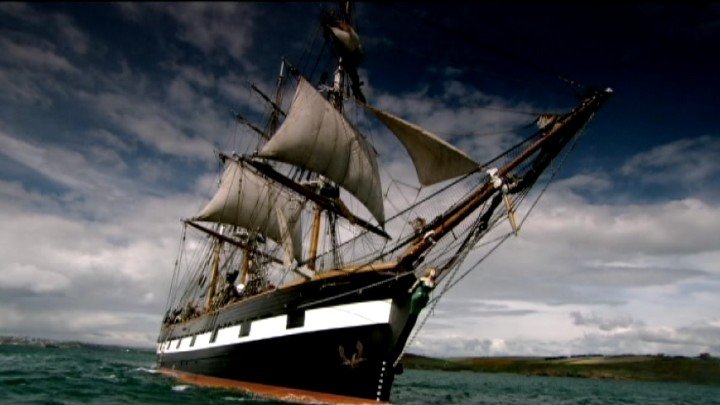
Death or Canada: Fleeing the Famine
It’s been called the most traumatic event in Toronto’s history. In the summer of 1847, nearly 40,000 Irish famine refugees flooded the city, threatening to overwhelm the local population of only 20,000. A typhus epidemic followed and by the fall, more than 1,000 had died. It remains the single largest loss of life in the city’s history and the bodies of those who died are buried anonymously under a school playground in Toronto’s downtown east end. The two-hour docudrama begins in Ireland and finishes in Canada. It follows the journey of the Willis family, a family of six who left Ireland in the worst year of the famine and came to the new world in search of a better life.