Grade levels: Primary (1-3)

  • The Three Bears Problem / The Giant Problem

    The Three Bears Problem / The Giant Problem

    The Three Bears Problem

    Fairytale Land
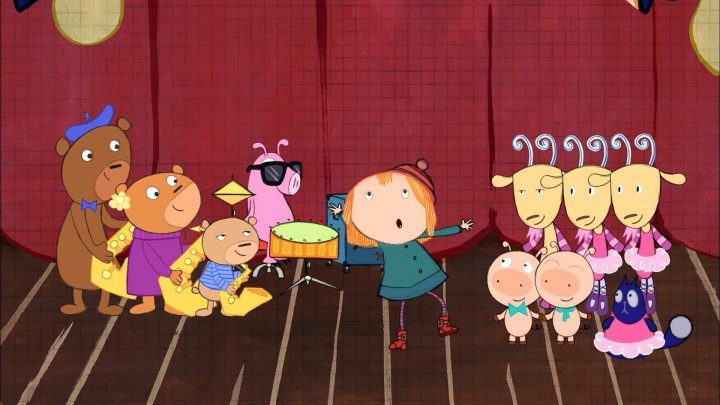
    Peg and Cat bring the Three Bears, the Three Little Pigs, and the Three Billy Goats Gruff together to form a super group: “The Electric Eleven”.

    • Primary Content: Adding 1
    • Secondary Content: Counting to 11

    The Giant Problem

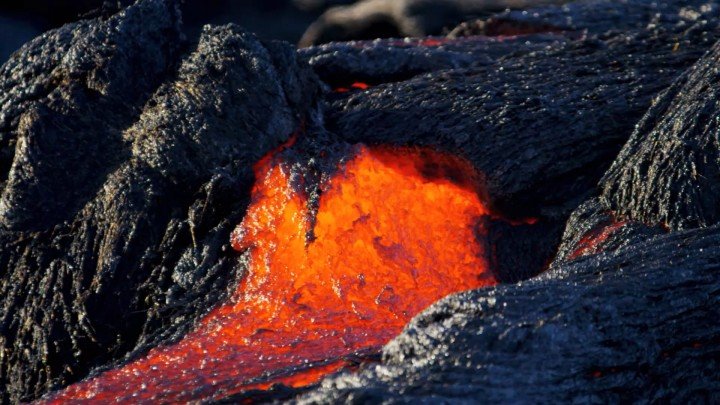
    Giant Land
    Peg and Cat must attempt a great escape when they think the Giants want to eat them and their 8 fairy tale friends for lunch.

    • Primary Content: Combinations that add up to 10
    • Secondary Content: Circle
  • The Circus Problem / The Buried Treasure Problem

    The Circus Problem / The Buried Treasure Problem

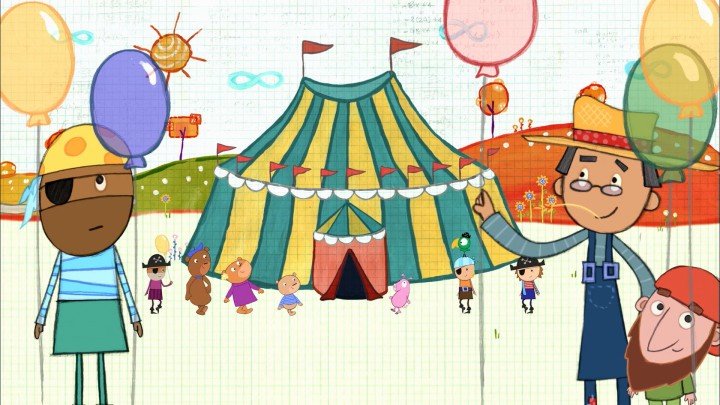
    The Circus Problem

    The Circus
    When Peg and Cat find themselves in the center ring, they climb, swing, swoop and juggle their way over amazing heights and lengths.

    • Primary Content: Measuring height, measuring length
    • Secondary Content: Counting by twos

    The Buried Treasure Problem

    Pirate Island
    Peg and Cat measure their way to buried treasure using Cat as a measuring stick!

    • Primary Content: Non-standard units of measurement
    • Secondary Content: Mapping
  • The Chicken Problem / The Space Creature Problem

    The Chicken Problem / The Space Creature Problem

    The Chicken Problem

    The Farm
    Peg and Cat have to get 100 chickens back in the coop before the farmer sees.

    • Primary Content: Size correspondence
    • Secondary Content: The number 100

    The Space Creature Problem

    The Purple Planet
    Peg, Cat and Richard must get the 100 chickens away from Big Mouth and back to their spaceship.

    • Primary Content: Counting by tens
    • Secondary Content: The number 100
  • The Messy Room Problem / The Golden Pyramid Problem

    The Messy Room Problem / The Golden Pyramid Problem

    The Messy Room Problem

    Peg’s Room
    Peg and Cat sort through the mess in Peg’s room just in time for company to come over and see Cat’s masterpiece, “The Circles”.

    • Primary Content: Sorting
    • Secondary Content: Shapes

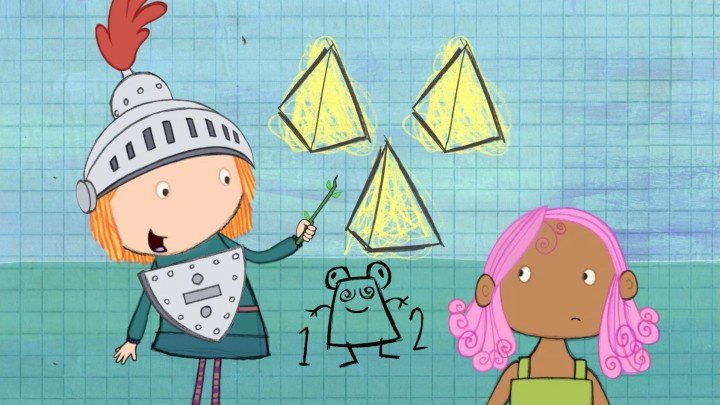
    The Golden Pyramid Problem

    Magical Forest
    Peg the Bold and Brave Sir Cat, Knights of the Round Table, search far and wide to retrieve the Mermaid’s golden pyramids.

    • Primary Content: Solid shapes
    • Secondary Content: Counting by twos
  • The Pirate Problem / The Sleepover Problem

    The Pirate Problem / The Sleepover Problem

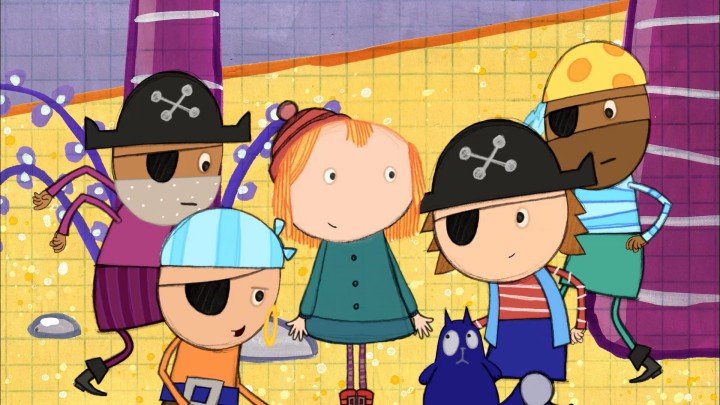
    The Pirate Problem

    Pirate Island
    Peg and Cat show a group of very hungry Pirates how to share tropical fruit fairly.

    • Primary Content: Fair sharing
    • Secondary Content: Adding within 4

    The Sleepover Problem

    Peg’s House
    When the Pirates are having a sleepover at Peg’s house, they get scared at bedtime. Peg and Cat help the Pirates fall asleep by counting chickens.

    • Primary Content: Counting to 20
    • Secondary Content: 4 + 1 = 5
  • Cars

    Cars

    The Big Question: “Is a Ferrari faster than a cheetah?”

    Synopsis: Harrison finds out how a car works when a teenage race car driver brings her mini Formula 1 to Harrison’s house.

    My Great Challenge: Challengers race remote-controlled cars along a track filled with obstacles to understand how road conditions can make driving hazardous.

    In the Field: Harrison goes to a race track and gets to drive a real Ferrari! Then, with an expert driving instructor at the wheel, they burn rubber to see who’s faster – the Ferrari or a cheetah?

  • Pets

    Pets

    The Big Question: “Why don’t people have wild animals as pets?”

    Synopsis: Harrison starts a pet-sitting service, but he’s soon overwhelmed by how much work it is – especially when one of the pets turns out to be surprisingly wild. Fortunately, a zoo-owner friend helps him out.

    My Great Challenge: Harrison’s studio is full of real animals – a bird, dog, hamster, and a cat. Challengers have to match various pet foods, toys, and other pet-care items to the correct pet before time’s up.

    In the Field: Harrison visits a professional dog-trainer to get help with a particularly unruly puppy.

  • Investigations

    Investigations

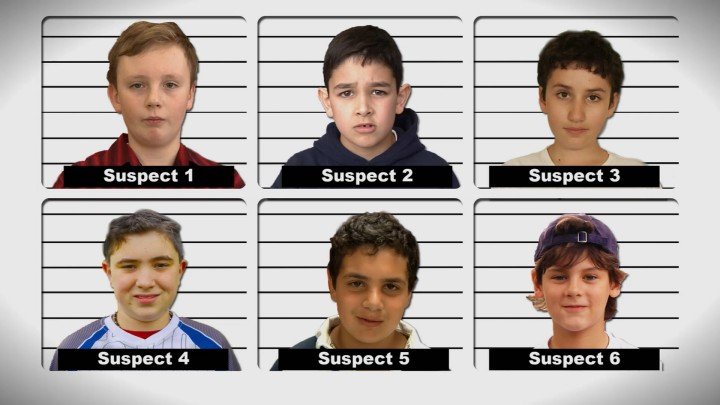
    The Big Question: “What clues do detectives need to figure out a crime?”

    Synopsis: Someone took a bite out of Harrison’s cheese sandwich! Who was this nefarious nabber? To find out, Harrison brings in a detective and a forensics expert to collect fingerprints, DNA evidence, and other clues.

    My Great Challenge: How reliable is eyewitness testimony? To find out, challengers watch a video of a “crime,” and then Harrison and the detective quiz them about how much they remember.

    In the Field: Harrison visits the world’s cutest crime fighters: police dogs! To test how they can sniff out a criminal, Harrison hides while the dogs follow their noses to find him.

  • Rocks

    Rocks

    The Big Question: “When you squish a piece of coal, how does it turn into a diamond?”

    Synopsis: Harrison wants to find out if he can really make gems from charcoal or gold from lead. A geologist guest shows him that other kinds of rocks are cool too, especially meteorites. Rocks rock!

    My Great Challenge: Challengers pan for gold in a stream, just like old-time miners. But watch out for fool’s gold!

    In the Field: Harrison rappels down into a cave to see how stalactites and stalagmites are formed.

  • Tails

    Tails

    The Big Question: “Why don’t humans have tails?”

    Synopsis: Harrison’s computer says that people do have tails. How is that possible?! To find out more about tails, Harrison invites animal experts who bring over a live kangaroo, skunk, marten, and snapping turtle. Turns out, different animals use their tails for different purposes.

    My Great Challenge: Does a rabbit’s short tail make it harder to catch? To find out, challengers put on both long and short tails, and then have to run for their lives as “carnivores” try to catch them by the tail.

    In the Field: Harrison visits a paleontologist at the natural history museum. By comparing vertebrate skeletons, Harrison discovers that tails – including our tailbones – are evolutionary adaptations.