Starting with defining reversible reactions, this program covers the basic concepts of chemical equilibrium and the equilibrium law. Examples and analogies are used throughout to represent the concept of equilibrium, including: movement of cars in and out of a car park; movement of a person walking the opposite way to a moving walkway; and the movement of people on and off paddleboats. Sample calculations are provided, with stopping points suggested so students can tackle a similar calculation. Finally, the program considers what an equilibrium constant indicates about a reaction – in terms of the relative quantities of reactants and products present at equilibrium. Carbon monoxide in the bloodstream is used to illustrate this point
Grade levels: Adult
-
Key Functions of Business
Using Holden as a case study, this program looks at the key functions performed in business on a daily basis. Each of these functions enables the organisation to achieve its goals. Departmental managers must not only have expert knowledge of their own area, but also how their department fits into the overall structure, interacting with, and supporting other key functions of the business. This program examines these concepts using Holden as an illustrative case study. In particular the program looks at the Manufacturing Operations, Human Resources, Marketing and Sales, and Finance departments and how they fit together to make up the whole of the company.
-
Life Cycle Assessment
Life cycle analysis has been more recently referred to as Life Cycle Assessment, which is an internationally recognised method of studying the potential and environmental impact of a product throughout its life “from the cradle to the grave”. The impact of a wide range of materials is covered in the program, including the acquisition of raw materials, production, transportation, use and disposal of metal, plastic and wood products. The program features interviews with Tim Grant, the project manager for life cycle assessment at the Centre for Design at RMIT University, who shares his experience in applying LCA and other environmental tools with various organisations and companies.
-
Lifting the Lid: How Computers Work
Most computer users are familiar with terms such as chips, hard drives, RAM, but what is a chip and what does it actually do? What does a hard drive look like and how does it work? Although the details of what lies under our computer cases is changing rapidly, the underlying design remains relatively stable. Aided by illustrative graphics, this program looks at the functions of the main components of a PC. It also covers a brief history of the development of the PC’s main, or mother board over the past 15 years.
-
Foods for Special Needs
Agriculture and trade have completely revolutionised our diets. We now have an amazing range of things to eat. But not everyone can feast freely. Many people have special needs that shape what they can eat and when. Food for Special Needs examines food allergies and intolerances, dietary-related diseases and disorders. Cultural and religious beliefs that determine diet are also considered.
-
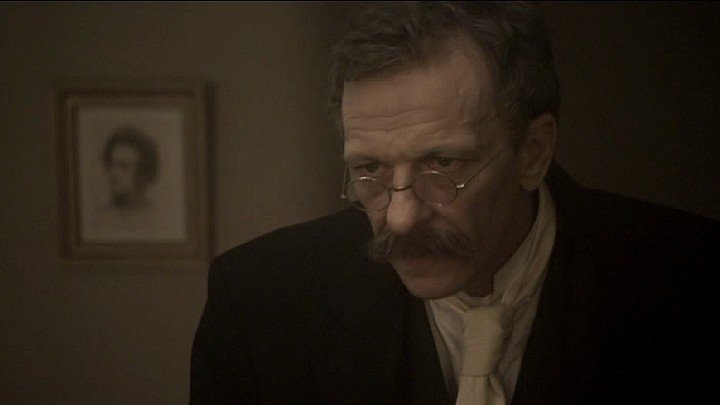
1916, Episode 1: Thomas J. Clarke
“They gave their lives for Ireland.” The 1916 Easter Rising changed the course of Irish history and at the heart of the story of the Rising are the seven men who put their names to the Proclamation of the Irish Republic. By signing the Proclamation each man knew they were committing themselves to bloody rebellion, and in all likelihood signing their own death warrant.
-
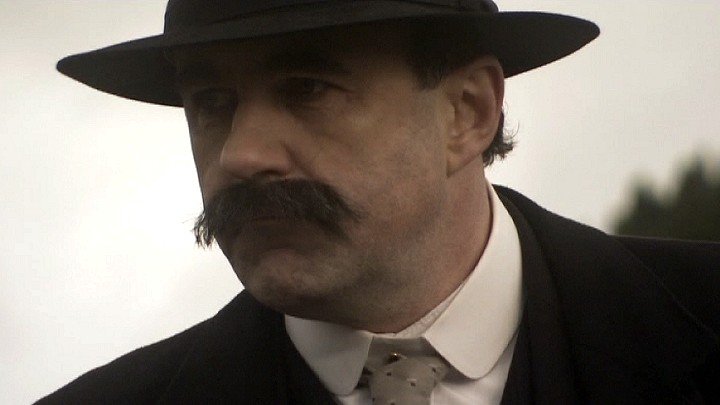
1916, Episode 2: James Connolly
“They gave their lives for Ireland.” The 1916 Easter Rising changed the course of Irish history and at the heart of the story of the Rising are the seven men who put their names to the Proclamation of the Irish Republic. By signing the Proclamation each man knew they were committing themselves to bloody rebellion, and in all likelihood signing their own death warrant.
-
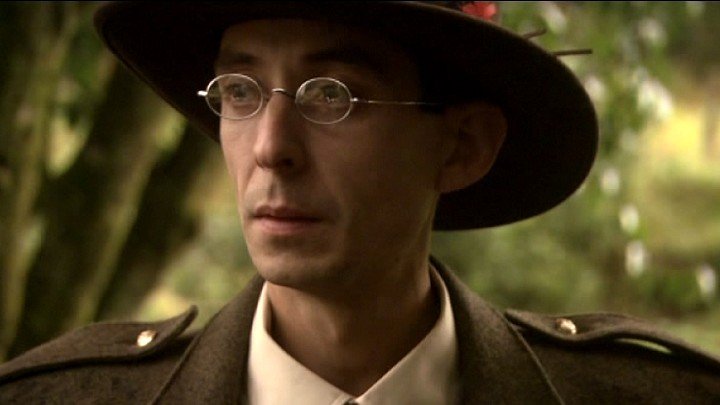
1916, Episode 3: Joseph Plunkett
“They gave their lives for Ireland.” The 1916 Easter Rising changed the course of Irish history and at the heart of the story of the Rising are the seven men who put their names to the Proclamation of the Irish Republic. By signing the Proclamation each man knew they were committing themselves to bloody rebellion, and in all likelihood signing their own death warrant.
-
Water: A Unique Chemical
Water is a unique chemical. Without it, life as we know it cannot exist. It exists in all three phases naturally on Earth. At first glance, the chemistry of water appears a very simple, but it has some remarkable and unique properties, because of its molecular structure and composition. This excellent production examines some of water’s important chemical properties, including its polarity and the strength of bonds between water molecules, dispersion forces, heat capacity and its ability to self-ionize. Sections are titled: water, a unique chemical; the three states of being; the nearly universal solvent; and water and chemical reactions. It is an ideal learning resource for senior secondary level students of Chemistry, with high quality imagery used to explain complex principles.
-

Chemical Analysis Techniques
Chemical analysis has wide-ranging applications, from its use in many different industries such as mining, environmental management and chemical manufacturing, to forensic science and cutting-edge medical testing and procedures. This high quality production explores a range of important chemical analysis techniques, including chromatography, mass spectrometry, infra-red and nuclear magnetic resonance (NMR). It explains how chemical principles are applied in the various analysis techniques and how it is possible to identify very specific chemical elements and compounds using them. Students of Chemistry will find the structure of this outstanding resource, together with the graphics and other visual imagery, engaging and effective in explaining the range of concepts covered.