Accidents in the retail workplace cost millions of dollars per year in both direct costs and loss of production, not to mention the human suffering that an injury can cause. Employers and employees have legal responsibilities to keep workplaces safe and to reduce these risks, and the retail environment has some unique OHS conditions that you need to be aware of. In this program we hear from leading retail bodies about the effects of workplace injuries, legal obligations, employer responsibilities, employee responsibilities, the main types of injuries and what to do if there is an OH&S issue. A positive and pro-active look at the issues and how to make your retail workplace safe.
Grade levels: Adult
-
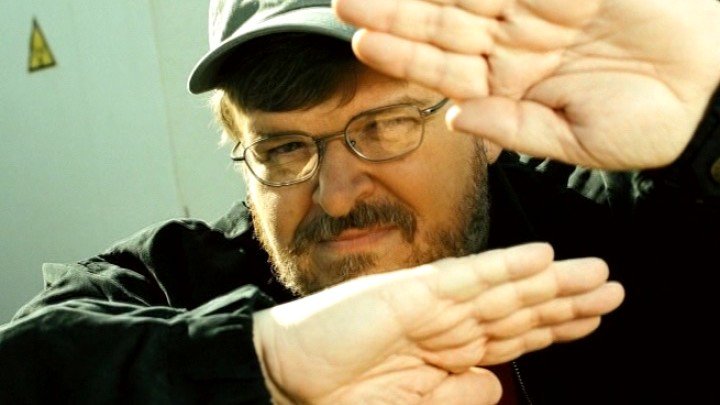
Shooting Michael Moore
Think you know Michael Moore? Think again. The media darling has made millions by deceiving the world with his movies such as “Fahrenheit 9/11”, “Roger and Me” and “Sicko”. “Shooting Michael Moore” exposes the real man behind the films from people who knew him, worked with him and were in his movies. A champion for the underprivileged he is not!
-
Effective Communication in Business
Businesses rely heavily on communication – particularly in the information age of the 21st-century. In today’s world it is often necessary to share information with many different people both internally and external to the organization. Without clear communication, false information could be provided to suppliers, employees or customers, with the end result – confusion, and little hope of success. In this program we define what effective communication is, what stops it, why it’s so important, the communication methods that modern businesses employ, and the importance of ethics in communication. Follow us as we prove the importance of effective communication in business.
-
Environmental Sustainability in Business – A Case Study
Businesses have always had to respond to different external influences. It was technology in the 80s and security in the 90s, but now a new challenge has emerged – climate change. Business owners are fast realizing that reducing their environmental footprint is not just a PR exercise, it’s vital to their future. This program features a case study of businesses that have developed unique approaches to sustainability. Their visionary leaders reveal how becoming ‘green’ has helped make their businesses stronger and more financially viable. Through interviews we discover the problems they faced, the benefits of change and their organization’s future directions.
-
Hand Tools for Woodworking
For centuries humans have used their hands to build things and shape their environment, from creating a simple wheel to constructing giant sky scrapers. As our skills and the complexity of our tasks develop so do the tools we use. But no matter how big the job or how complex the task, many of the basic hand tools we use have remained the same. This program introduces us to a range of basic hand tools covering their uses, tips, and possible pitfalls. A full demonstration of how to safely and effectively use a range of saws, planes, and chisels is provided.
-
Safety First: OH&S in the Office
Many Americans spend a large portion of their working lives in an office. Although most of us wouldn’t consider this a workplace of high risk, we must not assume that safety in an office is a given. In this program we’ll consider the reasons for conducting work safely, and look at how to implement workplace safety requirements. We’ll also talk about participating in the OH&S consultative process and following safety procedures. Occupational health and safety is everybody’s responsibility, not just the employer’s. Employees can and should take a hands-on approach to improving the safety of their workplace.
-
Design: A Team Approach
In this program students apply techniques and processes to design, manufacture and assemble a product as a team, and then apply evaluation principles to assess the overall exercise. They examine how design teams and individual designers evaluate their use of materials, techniques and processes in transforming design options into a product range or team-designed product. Design: A Team Approach seeks to show how a team works towards a common goal beginning with a client interview through to the design stage, the planning and communicating of ideas, through to the actual production. The program concludes by demonstrating how evaluation can be a useful tool to monitor a team’s progress towards their common goal.
-
What Drives Phenomenal Success?
Southwest Airlines started with a simple idea, and managed to stick with it through decades of unprecedented growth. Many have tried (but failed) to emulate their success. According to Colleen Barrett, the idea is so simple, nobody quite believes it: customers return because they like the experience and they like the way they are treated. But how do you keep your customers this satisfied? By keeping your employees satisfied. Barrett spends 70-80% of her time assuring that her employees are valued as people, and encouraged to do the right thing rather than doing things right. She acknowledges that you can’t expect employees to be saints, but you can expect integrity and commitment to the team. Her guiding rule is to hire on attitude and then train for skills, seeking individuals who will take the business-but not themselves-seriously.
-
Balancing the Books: Understanding Financial Reporting
Balancing the books is an essential part of business. Accounting methods help businesses collect, record and analyze financial data. Follow trainee accountant Calvin Clegg, a contestant on the quiz show “Who Wants to Make a Million” as he is quizzed with accounting questions that take him back to his accounting traineeship. His supervisor Dianne teaches him how to balance the books and how to evaluate business performance using financial records. Areas covered include accounting information and tools, the balance sheet, calculating profit and loss, cash control, and assessing financial performance. With Dianne’s help, Calvin is poised to “make a million”.